


Good morning. 
Help us make TC Daily better. Got a favourite part? Something you always skip? Something you wish we covered more? Tell us what you think about this newsletter. It’ll only take a few minutes.
Last call: Today is your last chance to secure a 20% discount on your Moonshot 2026 ticket. So, hurry—get your ticket now. The discount ends today.

Read smart insights about Francophone Africa’s tech ecosystem—weekly.

Regulation
In South Africa, serial spam callers could face up to 1 year in jail

Spam calling is a tricky cold outreach tactic. Get it right, and you may be lucky enough to win your business’s next customer. Get it wrong, and you can turn a stranger into an enemy. Now, the South African government wants to make it harder for businesses to use unsolicited calls.
Explain like I’m new here: South Africans have been dealing with spam calls from random numbers that interrupt their day, often with a salesperson on the other end. In 2019, a report found that South Africans received about 25 spam calls monthly, among the highest in Africa. The government had already tried to tackle the problem: South Africa’s Consumer Protection Act provided for an exclusion register as far back as 2011, while its data protection law later introduced rules restricting unsolicited electronic marketing.
State of play: But things got worse. In H1 2026, Truecaller, a call identity platform, said South Africans recorded 17.47 billion spam calls. Now, the regulators want to grow more teeth. New draft guidelines from the National Consumer Commission (NCC), the country’s consumer protection watchdog, say repeat or serious violations could lead to criminal prosecution, with offenders facing fines or up to 12 months in prison.
A year in prison for a spam call may sound excessive until you look at what the rule is trying to change. Most anti-spam systems put the work on the consumer. Block the number. Report it. Register your number on a do-not-call list. Download an app. When another number appears, do it all again.
Between the lines: South Africa’s proposal is now shifting some of that work to the businesses making the calls. Before sending out a marketing campaign, they would have to check their lists against the country’s opt-out registry—which businesses must register to use—and remove consumers who have opted out of receiving those calls. The registry would then charge R0.12 ($0.0072) per name check and return a cleaned list that remains valid for 30 days.
Zoom out: South Africa has had rules against unwanted marketing for years, with fines, but little has changed. Businesses were okay paying fines if the commercial gains outweighed the risks. A jail term is a more serious threat; it remains to be seen how often the government will actually enforce it and whether marketers comply.


Every business owner needs to watch this.
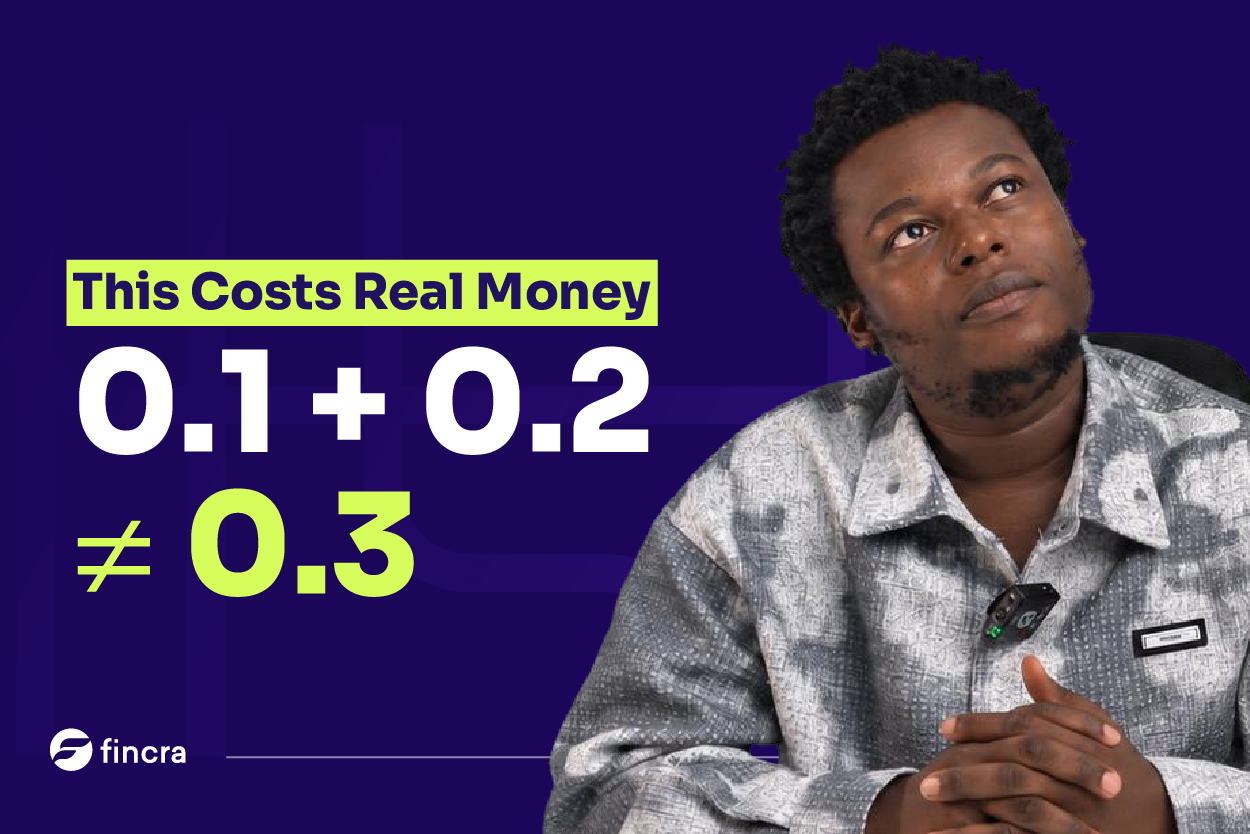
Ask a computer to add 0.1 and 0.2. It won’t give you 0.3. Now imagine that happening to your money, thousands of times a day. Fincra’s Engineering Lead breaks down why and how fintechs design around it. Watch the full breakdown.
Telecoms
Ghana awards 5G network licences to MTN Ghana and Telecel

In 2024, Ghana tried to make 5G a shared infrastructure project. It planned for one state-backed company to build and run the network, while private telecom operators would rent it and offer the service to customers. Two years into that plan, the rollout is falling below expectations. The country wanted to build 4,400 sites to reach 37 million customers by 2028. But as of March 2026, only 49 5G sites existed—about 43 in Greater Accra—leaving most Ghanaian telecom users without a 5G network to brag about. So, the government dropped the exclusivity and changed course.
What’s new? On October 2, Ghana awarded 5G spectrum and licences to MTN Ghana, the country’s largest telecom firm, and Telecel Ghana, the other major network operator, allowing both companies to build and operate their own 5G networks.
Explain like I’m new here: Ghana’s original 5G plan was centred on a single network that multiple telecom operators could use. Instead of MTN and Telecel each building their own 5G infrastructure, a state-backed company called Next-Gen InfraCo (NGIC) would build the network and lease capacity to them. The idea was to avoid duplicating expensive infrastructure while getting 5G to more people.
The Ghanaian government backed NGIC, with Indian billionaire Mukesh Ambani’s Reliance Industries involved through Radisys, which was selected to provide the network infrastructure. Ghana’s 1,200-site 2027 target was at risk due to slow progress. Now, the country has conceded to private operators building and running their own 5G networks.
What happens now? Telecel plans to launch its service in December on its own network. MTN Ghana secured spectrum in the different bands, paying about $100 million for each 15-year licence. For customers, having two major operators building their own 5G networks could mean more 5G coverage, more network capacity and less dependence on a single infrastructure provider. It could also give MTN and Telecel more control over how quickly they expand capacity in areas where customers use more data, underscoring the commercial benefits.
Zoom out: The move could leave Ghana with two major 5G networks, while giving private operators more control over the rollout. The government’s original model was meant to prevent that, keeping the telecom infrastructure under Ghanaian control. It is not clear yet whether giving MTN and Telecel their own networks will produce faster coverage, but both operators already have larger infrastructure footprints and investment plans. NGIC’s existing 5G sites are not being scrapped, either; it keeps its licence and spectrum rights, though it no longer has exclusive control of wholesale 5G infrastructure.
Don’t miss Moonshot 2026 for anything in the world!

True scale demands moving beyond surface-level integrations to robust execution. We’ve filtered the noise out of Moonshot 2026, optimising the conference strictly for high-calibre connections between startup founders, global financial operators, enterprise leaders and individuals rewiring Africa’s technical frameworks. Join us on October 28 & 29, 2026. Get your ticket.
AI
Ghana will centrally review all government AI purchases

Ghana does not want government agencies buying AI tools however they please. The country will now centrally review every AI system the public sector acquires, checking what happens to government data, whether different systems can work together, and whether Ghanaian workers can eventually operate the technology without depending permanently on its supplier.
Explain like I’m new here: Government technology contracts can last years. Once an agency builds its operations and data around one company’s software, switching providers can become expensive and difficult. This is called vendor lock-in. With AI, the stakes are higher because systems can process sensitive government and citizen data.
Under the new rules, Ghana’s Ministry of Communication, Digital Technology and Innovations will coordinate requirements, while the National Information Technology Agency (NITA) will assess proposed systems for cybersecurity, data protection, interoperability, sustainability, and local skills transfer.
Why now? Ghana is preparing to spend heavily on AI infrastructure. Its ten-year National AI Strategy includes a planned $250 million AI Compute Centre and upgrades to the National Data Centre. Centralising procurement standards aims to set the rules before ministries start building separate AI systems that are difficult to connect later.
Between the lines: Ghana is using government procurement as industrial policy. Requiring skills transfer means a foreign company cannot simply sell software and leave Ghana dependent on it. Requiring interoperability makes it harder for one supplier to become indispensable.
Why this matters: Governments are potentially among the biggest early buyers of AI in African markets. Whoever supplies those systems could shape how public-sector AI develops for years. Ghana is trying to keep that relationship on its terms: foreign technology can come in, but control over public data, technical knowledge, and the ability to change suppliers should remain at home.
Banking
South Africans are replacing ATMs with supermarket tills

South Africans are finding a cheaper place to withdraw cash: the supermarket checkout. Retail tills now process about R326 billion ($19.6 billion) in cash-back withdrawals every year, across 663 million transactions, according to the South African Reserve Bank (SARB).
Explain like I’m new here: Instead of visiting an automated teller machine (ATM) to withdraw cash, a shopper can pay at a supermarket till and ask for extra cash. For shoppers, this pattern is also relatively cheaper. The SARB found the average withdrawal at tills to be R492 ($30). Processing R100 ($6) this way costs about 12 cents ($0.0072) compared with 68 cents ($0.041) through an ATM and R1.53 ($0.092) at a bank branch.
State of play: South Africa’s roughly 30,600 ATMs cost about R307,590 ($18,500) each to operate annually. Consumers then bear another cost: R17.7 billion ($1.1 billion) in withdrawal fees every year, plus billions more travelling to and queuing at cash points. Noticing the trend, several major South African banks have been reducing their ATM footprint.
Between the lines: Retailers also have one big advantage. They already handle large amounts of cash from shoppers every day. Instead of paying to transport that cash back to a bank, some of it can be handed directly to customers making withdrawals at the till. This keeps cash circulating while cutting the cost of transporting, storing, and eventually loading it into ATMs.
Nigeria saw a more extreme version of this during its 2023 cash crunch. As ATMs ran dry and bank withdrawals became difficult, cash-heavy businesses and point-of-sale (PoS) agents became alternative sources of physical money, often charging customers a premium to withdraw scarce notes. South Africa is not facing the same shortage, but the underlying lesson is similar. When accessing cash through banks becomes costly or inconvenient, businesses that already handle cash can become part of the distribution network.
Zoom out: Banks spent decades making ATMs the bridge between customers and physical cash. South Africa’s retailers are now deciding that alternative routes work better for them. If cash-back expands further, especially into informal retail, the future of cash access may depend heavily on how effectively these existing shops can double as neighbourhood cash points.
CRYPTO TRACKER
The World Wide Web3
Source:

|
Coin Name |
Current Value |
Day |
Month |
|---|---|---|---|
 Bitcoin Bitcoin |
$85,891 |
+ 0.97% |
+ 7.71% |
| Ether |
$2,701 |
+ 0.26% |
+ 10.23% |
| Doppler Finance |
$0.02055 |
+ 2.51% |
+ 28.01% |
| Solana |
$120.25 |
– 0.44% |
+ 18.22% |
* Data as of 06.40 AM WAT, October 5, 2026.
JOB OPENINGS
- Bumpa — Social Media Associate — Lagos, Nigeria
- Paystack — Product Manager, Financial Systems, several other roles — Hybrid (Lagos, Nigeria)
- Paystack — Product Manager, South Africa, Account Manager — Hybrid (Cape Town, South Africa)
- Paystack — Platform Security Engineer — Nigeria, Kenya, South Africa
- Qore — Engineering Specialist, Offensive Security — Lagos, Nigeria
- OPay — PR Strategist — Lagos, Nigeria
- RadioNow — Videographer — Lagos, Nigeria
Looking for more opportunities? There are additional openings on TechCabal’s job board. We’ve also cleared out outdated listings to keep opportunities fresh for job seekers. If you’re hiring and would like to feature an open role, please submit it via this form.


Written by: Yemi Kareem and Emmanuel Nwosu
Edited by: Emmanuel Nwosu & Ganiu Oloruntade
Want more of TechCabal?
Sign up for our insightful newsletters on the business and economy of tech in Africa.
- The Next Wave: futuristic analysis of the business of tech in Africa.
- Francophone Weekly by TechCabal: insider insights and analysis of Francophone’s tech ecosystem
P:S If you’re often missing TC Daily in your inbox, check your Promotions folder and move any edition of TC Daily from “Promotions” to your “Main” or “Primary” folder and TC Daily will always come to you.

from TechCabal https://ift.tt/AJ3pmIM
via IFTTT

I am the CEO of 9JAGISTLAND.My name is Adedeji Timothy and my co-owner is Oyekola Damilare.This blog is born out of our passion to educating to people in all aspect of internet life.We are enthusiastic about writing posts and articles online.
« Prev Post
Next Post »
Write your views on this post and share it. ConversionConversion EmoticonEmoticon