



Good morning. 
Did you know that a one-time salary can buy you a lifetime opportunity?
Get 20% off your Moonshot 2026 ticket and spend two days at the National Theatre, Lagos, alongside founders, investors, operators, creators, and talent from across Africa and beyond. Moonshot gives you access to the people, ideas, and opportunities that could influence what you build, fund, or pursue next.
The 20% Salary Week offer ends Monday, October 5. Don’t let payday pass before you lock in your place. Get your Moonshot ticket at 20% off →

Read smart insights about Francophone Africa’s tech ecosystem—weekly.

Mobility
ARC Ride expands electric motorcycles to South Africa

Kenya’s electric motorcycle boom is crossing the border. ARC Ride, the Nairobi-based startup, is taking its Panther motorcycle to South Africa, where it plans to sell to commercial fleets in Gauteng and the Western Cape. It’s bringing a battery-swapping model that has found traction in Kenya to a market where commercial motorcycles are less established. With last-mile delivery growing and fuel still a major cost for riders, ARC Ride sees an opening for a different kind of workhorse on South African roads.
Explain like I’m new here: Electric motorcycles are as much an energy infrastructure business as a transport one, because keeping riders moving means having enough batteries, swap stations, and capital to build a network that lets them avoid hours of charging.
ARC Ride owns the batteries rather than requiring riders to buy them. In Kenya, a swap costs as little as KES 185 ($1.40), while typical swaps can cost about KES 270 ($2.10), depending on usage. Daily packages range from KES 350 ($2.70) to KES 450 ($3.50). ARC Ride says its automated stations can complete a swap in less than 60 seconds.
What does it mean? South Africa will test whether this model can work beyond East Africa’s established boda boda market.
ARC Ride will sell the Panther for R22,500 ($1,390), about R500 ($31) below the Big Boy Superlight 200, while offering a 292kg payload and operating costs the company says are 35% lower than a petrol bike.
The target is last-mile delivery, where fuel costs directly affect rider earnings. Support from the Western Cape Government has also helped ARC Ride move through vehicle homologation.
The bigger context: The expansion follows ARC Ride’s $33.3 million Series A, including about $10 million in debt from British International Investment’s (BII) Kinetic programme and Mirova. The company also secured a separate $10 million debt facility in 2025.
The funding mix points to a problem facing hardware-heavy climate startups. Batteries and swap stations require large upfront investments, but can generate revenue over several years. Debt lets ARC Ride finance some of those assets without using as much equity to fund hardware.
Zoom out: South Africa has not developed the same commercial motorcycle market as Kenya, but its growing delivery sector gives ARC Ride another market to test its model.
What happens next could say more about the business than the Panther itself. If riders and fleet operators adopt the bikes, ARC Ride will have shown that battery swapping can travel beyond the markets where commercial electric motorcycles are already common. If they do not, the problem may be less about the bike and more about whether swapping economics work in every market.


Every business owner needs to watch this.
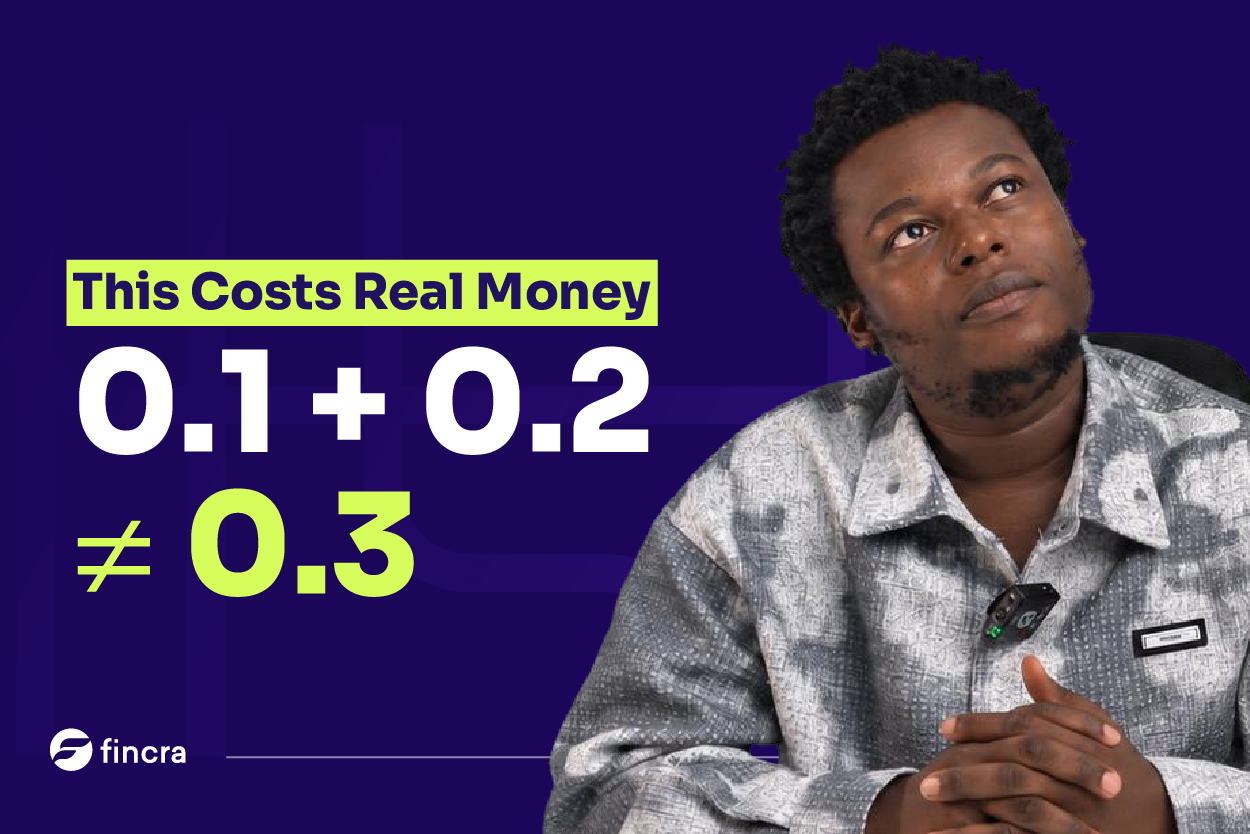
Ask a computer to add 0.1 and 0.2. It won’t give you 0.3. Now imagine that happening to your money, thousands of times a day. Fincra’s Engineering Lead breaks down why and how fintechs design around it. Watch the full breakdown.
Banking
Egypt’s banks made $7.2 billion in the first half of 2026. Here’s who is really benefiting

Banks operating in Egypt are making money at a pace that would have looked extraordinary just a few years ago. They posted EGP 373.1 billion ($7.2 billion) in net profit in H1 2026, according to the Central Bank of Egypt (CBE)—roughly 36% higher than the EGP 274.9 billion ($5.3 billion) recorded in H1 2025.
The numbers also show just how concentrated the sector is. The 10 largest banks generated 81.5% of the sector’s profits. The five biggest accounted for 70.1%, compared with 64.6% recorded the previous year.
Explain like I’m new here: Banks make money by taking deposits, lending money, and earning interest along the way. The difference between what banks earn on loans and what they pay depositors is a big part of their income. In H1 2026, Egyptian banks made EGP 567.9 billion ($11 billion) in net interest income, while the sector’s net interest margin was 5.2%.
Why now? Egypt has spent the past two years operating with very high interest rates as the CBE fought inflation. The central bank’s overnight lending rate was 25% in July 2025. It has since eased; by February 2026, Egypt’s lending rate was 20%. That rate has remained unchanged since then. The CBE’s overnight deposit rate is currently 19%, down from 24% in July 2025.
The country’s moderating inflation rate has also given the regulator room to be prudent with its rate decisions. Annual urban headline inflation fell to 11.9% in January 2026, then accelerated to 15.2% in March before easing to 14.5% in August. High rates can make borrowing expensive for households and businesses. However, they also create a large pool of interest income for banks with large loan books and investments in interest-bearing assets. As the CBE eventually lowers rates, that income source could come under pressure.
Between the lines: Banks’ return on equity was 32.2% in 2023, rose to 39% in 2024, and remained around 39% through 2025 before settling at 33.9% in June 2026. At the same time, the sector’s net interest margin rose from 3.8% in 2022 to 5.8% in 2024 and 2025.
Why should customers care? Higher rates can mean better returns on some savings products, but they can also mean more expensive loans, mortgages and credit. And as profits become concentrated among the biggest banks, the health of a handful of institutions could matter more to the wider banking system. We’re seeing a similar concern emerge in Kenya, where the central bank is working on a framework for banks whose failure could disrupt the wider financial system.
There is another wrinkle: In September, the International Monetary Fund (IMF) said Egyptian banks remain well capitalised and profitable, but their heavy exposure to the government could become a risk if the country’s financial position worsens.
Your stablecoins can now earn up to 7%

As stablecoin use grows across emerging markets, Raenest is expanding what users can do with USDC and USDT. In addition to sending and spending stablecoins globally, Raenest has launched Stablecoin Vault, which lets eligible users earn up to 7% variable APY. Learn more at www.raenest.com.
Telecoms
South Africa finally frees spectrum reserved for a network that never launched
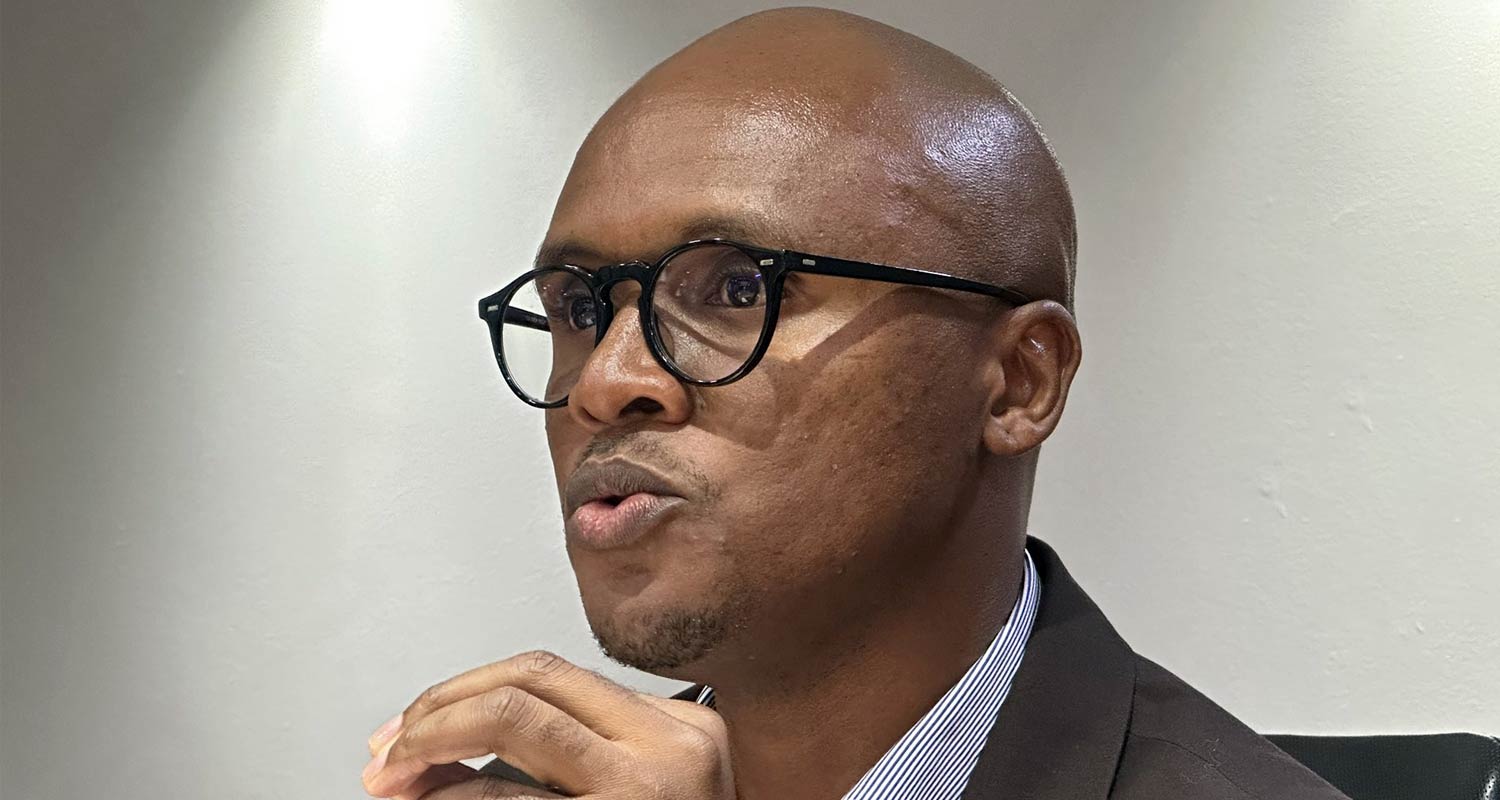
South Africa has finally ended its seven-year experiment with the Wireless Open Access Network (WOAN), freeing up valuable spectrum for other uses.
Explain like I’m new here: Spectrum is the invisible radio space that lets your phone connect to a mobile tower. It is limited, so governments divide it into blocks and licence them to telecom operators. More usable spectrum can mean more capacity for calls and data, better coverage, and less congestion.
In 2020, South Africa’s telecom regulator, the Independent Communications Authority of South Africa (ICASA), reserved part of this spectrum for the WOAN. The idea was to create a new wholesale network that would sell mobile capacity to other companies. It was supposed to bring more competition to a market dominated by big operators.
It never happened. ICASA suspended the WOAN process in 2021. Cabinet decided to scrap the scheme in March 2022, but the formal policy change was never completed. So the spectrum remained tied up while South Africa’s mobile networks kept expanding around it.
Why now? Solly Malatsi, the country’s communications minister, has finally withdrawn the reservation. ICASA can now decide how to licence the spectrum. The government has not yet said exactly how much will be released or when it will be auctioned.
Why this matters: This puts valuable mobile capacity back into play. For the country’s biggest telecom companies, MTN and Vodacom, and state-owned Telkom, more spectrum could mean more room to grow their networks and serve more customers. For smaller operators, how ICASA allocates it could determine whether they get a real chance to compete or whether the market’s existing leaders simply get more room to pull ahead. After years of trying to create competition through the WOAN, the next spectrum allocation will show what kind of mobile market South Africa actually wants.
Between the lines: The real lesson isn’t that the WOAN failed. It is that trying to create competition through a new network became a bigger bottleneck than the competition problem it was meant to solve.
Zoom out: South Africa already auctioned more than R14.4 billion ($884 million) of high-demand spectrum in 2022. Now another piece of the spectrum puzzle is moving. The next test is whether ICASA can turn it into more network capacity, better coverage, and stronger competition.
Don’t miss Moonshot 2026 for anything in the world!

True scale demands moving beyond surface-level integrations to robust execution. We’ve filtered the noise out of Moonshot 2026, optimising the conference strictly for high-calibre connections between startup founders, global financial operators, enterprise leaders and individuals rewiring Africa’s technical frameworks. Join us on October 28 & 29, 2026. Get your ticket.
Cybersecurity
Kenya recorded 11.12 billion cyber threats

Kenya’s tech regulator, the Communications Authority (CA), logged 11.12 billion cyber threat attempts in the year ending June 2026, up 29% year on year. While a 30% drop in the final quarter offers a superficial sense of relief, treating these figures as a simple trend line misses the underlying shift in how Africa’s most digital economy is being targeted.
Explain like I’m new here: Think of cyber threat detections like automated knocks on a door. Most of the 11 billion figure comes from automated bots background-scanning unpatched devices and databases, so much of it is routine digital noise rather than actual breaches. Threat volume spiked heavily between October and December 2025, reaching 4.56 billion detections driven by vulnerability scans, before cooling down in early 2026.
What does it mean? Attack tactics are evolving beyond blunt force. Distributed Denial of Service (DDoS) attacks more than doubled annually to 72 million, targeting government portals and essential public services. Though DDoS represents less than 1% of total detected volume, its real-world impact is massive because it temporarily shuts down critical civic infrastructure. At the same time, web application attacks nearly doubled to 51.5 million, showing that hackers are probing login pages and payment forms as more economic activity migrates online.
The bigger context: Advisories issued by the CA surged 60.8% to 83.1 million, while brute-force warnings skyrocketed 365.5% even as actual brute-force attempts grew just 3.6%. The massive gap shows a regulator flooding the ecosystem with proactive alerts to build baseline security hygiene across public and private institutions.
Zoom out: High-volume automated probing is now the baseline cost of doing business online, especially for startups and enterprises across East Africa. The critical vulnerability isn’t the volume of pings, but the gap between unpatched systems and web interfaces. As enforcement tightens and threat-sharing frameworks formalise, cybersecurity is moving from an IT line item to a core survival metric.
CRYPTO TRACKER
The World Wide Web3
Source:

|
Coin Name |
Current Value |
Day |
Month |
|---|---|---|---|
 Bitcoin Bitcoin |
$83,156 |
– 1.63% |
+ 7.14% |
| Ether |
$2,678 |
– 0.33% |
+ 8.73% |
| Ondo |
$0.5309 |
+ 23.59% |
+ 44.26% |
| Solana |
$116.25 |
+ 0.93% |
+ 23.21% |
* Data as of 06.55 AM WAT, September 28, 2026.
Opportunities
- The Citi Foundation is offering $500,000 grants to 50 organisations that help low-income young people build AI and other job skills. The grants can support programmes that teach skills such as prompt engineering and digital content creation, help young people find jobs, provide access to devices and software, or add AI tools to existing employment programmes. Applications close on October 6, 2026, at 5 p.m. Lagos time. Apply here.

Written by: Emmanuel Nwosu and Kenn Abuya
Edited by: Ganiu Oloruntade
Want more of TechCabal?
Sign up for our insightful newsletters on the business and economy of tech in Africa.
- The Next Wave: futuristic analysis of the business of tech in Africa.
- Francophone Weekly by TechCabal: insider insights and analysis of Francophone’s tech ecosystem
P:S If you’re often missing TC Daily in your inbox, check your Promotions folder and move any edition of TC Daily from “Promotions” to your “Main” or “Primary” folder and TC Daily will always come to you.

from TechCabal https://ift.tt/liSdw7e
via IFTTT

I am the CEO of 9JAGISTLAND.My name is Adedeji Timothy and my co-owner is Oyekola Damilare.This blog is born out of our passion to educating to people in all aspect of internet life.We are enthusiastic about writing posts and articles online.
« Prev Post
Next Post »
Write your views on this post and share it. ConversionConversion EmoticonEmoticon