


Published September 27, 2026
Kenya’s payments revolution cannot end with mobile money
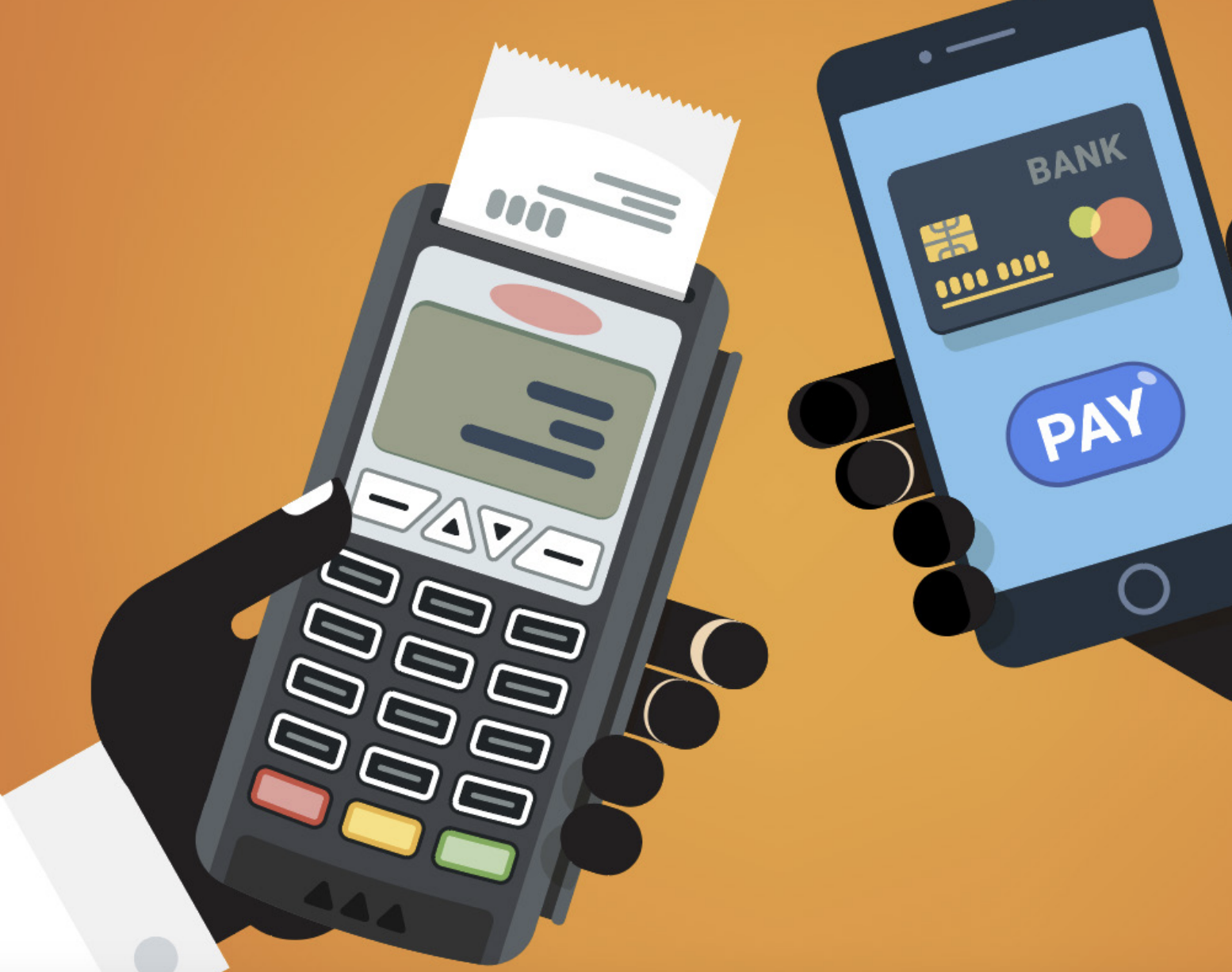
Image Source: Central Bank of Kenya (CBK)
Kenya has spent over two decades dining out on mobile money—and it has earned every right to.
Few technologies have influenced the global discourse on financial inclusion as profoundly as M-Pesa. What began as a simple peer-to-peer money transfer tool evolved into the central pillar of modern Kenyan commerce, transforming how citizens pay merchants, receive salaries, borrow, save, and manage capital. By July 2026, Kenya boasted 94.35 million registered mobile-money accounts supported by 575,400 agents, with KES 728.7 billion ($5.6 billion) passing through the network in that single month alone.
Yet past success can easily become an intellectual trap.
In Kenya, payment innovation has become synonymous with mobile money. New financial products are routinely celebrated merely for integrating M-Pesa. Commercial banks compete over how seamlessly customers can move funds between accounts and mobile wallets. Fintechs layer applications onto the exact same rails, while merchant quick response (QR) codes invariably point back to mobile-money agents.
Meanwhile, the remainder of the national payments stack receives scant attention.
Read smart insights about Francophone Africa’s tech ecosystem—weekly.
The hidden scale of Kenya’s card economy
This context makes Kenswitch’s launch of a domestic card scheme far more than a routine commercial announcement. It raises a fundamental strategic question: should a country building a digital-first economy own more of the underlying infrastructure driving its domestic commerce?
A sizeable card economy already exists to fight over. Kenya had 13.76 million payment cards by July 2026, including 11.16 million debit cards, according to the Central Bank of Kenya. There were 56,083 point-of-sale (POS) terminals. Kenyan merchants processed more than 6.2 million POS card transactions in July alone, worth KES 27.1 billion ($209 million).
Yet much of the infrastructure that allows those cards to function depends on international card networks.
Next Wave continues after this ad.

Visa and Mastercard solved an enormously difficult problem: making a card issued by one institution usable across millions of merchants and thousands of financial institutions worldwide. Kenya needs that global interoperability. A Kenyan travelling to Copenhagen, London or New York should be able to pay without thinking about the plumbing underneath the transaction.
But why should a Kenyan buying groceries in Nairobi necessarily require the same international infrastructure?
That distinction has persuaded some of the world’s largest economies to develop domestic payment schemes alongside global networks.
India launched RuPay in 2012 as its domestic card network. It did not stop there. The country subsequently built the Unified Payments Interface (UPI), creating a broader domestic payments architecture in which banks, fintechs, QR payments and increasingly cards can interact.
The numbers are staggering. UPI transaction volumes increased from 5.39 billion in the 2018-19 financial year to 131.13 billion in 2023-24, while transaction value increased from ₹8.8 trillion ($91.8 billion) to ₹200 trillion ($2.09 trillion). India has even connected RuPay credit cards to UPI, helping the domestic card scheme participate in the country’s shift towards QR payments rather than forcing consumers to choose between cards and account-to-account payments.
Saudi Arabia offers another useful example. Its domestic card network, Mada, has become part of a broader effort to digitise payments. In 2022, Mada processed 7.2 billion POS transactions, up 40% from the previous year, while online card transactions jumped 76% to 610 million.
By 2025, electronic payments represented 85 per cent of Saudi retail payments, and the country recorded 14.6 billion electronic transactions. The Saudi central bank explicitly attributes part of that expansion to growth through Mada alongside its other national payment systems.
Successful payment markets build infrastructure around their own economic circumstances.
Kenya did precisely that with mobile money. The problem is that we appear strangely reluctant to apply the same philosophy elsewhere.
A domestic card scheme could give Kenyan banks and fintechs another set of rails to innovate on. It could make it easier to experiment with local pricing, virtual cards, tokenisation, contactless payments and integration with domestic instant-payment infrastructure. Domestic transactions can be routed locally while international networks remain available when customers need to transact abroad.
There is also a resilience argument.
Payment infrastructure is becoming part of the critical infrastructure of modern economies. When millions of people depend on digital payments to buy food, fuel their cars, or run businesses, the question of who operates those rails stops being merely commercial. Governments from India to Saudi Arabia have consequently treated payment infrastructure as something worthy of deliberate national investment.
This should not be confused with autarky. Payment sovereignty does not mean disconnecting Kenya from Visa, Mastercard, or other global systems. A domestic scheme that cannot offer consumers reliability, security, and widespread acceptance will fail, no matter how patriotic its branding is.
The harder challenge for Kenswitch will therefore begin after the launch.
Cards become useful because merchants accept them. Merchants accept them because customers carry them. Banks issue them because customers want them. Breaking that circular dependency requires scale, incentives, and extraordinarily reliable infrastructure.
A domestic card cannot simply reproduce what existing cards do and expect consumers to care. Nor should its success be measured by how many pieces of plastic banks issue.
That remains true.
Kenya should be asking what comes after the mobile-money revolution: instant account-to-account payments that work across every bank and wallet; cheap merchant payments; domestic cards; interoperable QR codes; virtual cards issued in seconds; tokenised payments; tap-to-pay phones; offline payments; open banking; and payment infrastructure on which hundreds of companies can build products we have not yet imagined.
M-Pesa succeeded partly because Kenya did not inherit the assumptions of countries where cards and bank branches were already ubiquitous. It solved a Kenyan problem using the technology available at the time.
Almost twenty years later, the irony would be allowing that success to make Kenya conservative.
The most interesting thing about Kenswitch’s domestic card, therefore, is not the card.
It is the possibility that Kenya may finally be starting another conversation about what its payments system should look like after mobile money.
Next Wave ends after this ad.

Adonijah Ndege
Adonijah Ndege is a senior reporter at TechCabal. He leads the Life and Work Desk.
Thank you for reading this far. Feel free to email adonijah[at]bigcabal.com, with your thoughts about this edition of NextWave. Or just click reply to share your thoughts and feedback.
We’d love to hear from you
Psst! Down here!
Thanks for reading today’s Next Wave. Please share. Or subscribe if someone shared it to you here for free to get fresh perspectives on the progress of digital innovation in Africa every Sunday.
As always feel free to email a reply or response to this essay. I enjoy reading those emails a lot.
TC Daily newsletter is out daily (Mon – Fri) brief of all the technology and business stories you need to know. Get it in your inbox each weekday at 7 AM (WAT).
Follow TechCabal on Twitter, Instagram, Facebook, and LinkedIn to stay engaged in our real-time conversations on tech and innovation in Africa.


|
|


|
|
|
17, Eniyansoro Beyioku Street, Ajao Road, Off Ogunlana Drive, Surulere, Lagos 101212, Nigeria |
View in Map |
| You received this email because you signed up on our website or made purchase from us. If you no longer wish to receive these emails, please unsubscribe |
from TechCabal https://ift.tt/V6SB9Gb
via IFTTT

I am the CEO of 9JAGISTLAND.My name is Adedeji Timothy and my co-owner is Oyekola Damilare.This blog is born out of our passion to educating to people in all aspect of internet life.We are enthusiastic about writing posts and articles online.
Write your views on this post and share it. ConversionConversion EmoticonEmoticon