



Good morning. 

Yesterday, we launched Class of 2016, a TechCabal special project on African startups that have lasted a decade or more. Through companies like Yoco, BuuPass, PiggyVest and Flutterwave, the series tracks what it took to survive a decade filled with pivots, funding downturns and a pandemic, and how these companies helped shape today’s ecosystem.
In his opening essay, Ganiu Oloruntade, our Newsroom Editor, explains why 2016 matters and what surviving ten years demanded. This week, we will publish the stories of Yoco, the South African technology infrastructure company, and BuuPass, a Kenyan mobility startup. Read the essay here.
Reminder: You can still get 20% off on your Moonshot 2026 tickets before October 5. Hurry and snag tickets to the most important African tech event.

Read smart insights about Francophone Africa’s tech ecosystem—weekly.

Internet
Ghana said to be in talks with Amazon to bring Leo for satellite Internet access

More than a quarter of Ghana’s population were offline at the end of 2025. The problem with getting people online is a combination of different factors: first, make smartphones affordable for them to buy. Second, run fibre cables in remote, hard-to-reach areas, erect base stations, and hope it commercially makes sense for telecom companies.
Or, you can be like Ghana and court satellite Internet companies to fix the connectivity part for you using arguably superior technology that doesn’t have fibre running costs, while you worry about low smartphone usage, if at all.
What happened? On Friday, Ghana’s President John Mahama met David Zapolsky, Amazon’s senior vice president and chief global affairs and legal officer, in New York, United States. According to local publication Ecofin Agency, both delegates discussed broadband plans and Ghana’s digital infrastructure.
One idea on the table is Amazon Leo, Amazon’s low-Earth-orbit (LEO) satellite network. Both sides floated the idea of expanding the satellite Internet into rural Ghanaian communities and elsewhere in Africa.
Explain like I’m new here: Ghana wants expanded Internet access for its people. According to the National Communications Authority (NCA), the country had 30.5 million mobile Internet subscribers, an 89.5% mobile penetration, as of June. However, while mobile Internet figures count 3G, 4G, and 5G networks, and multiple same-owner subscriptions, Internet penetration tells a different story. And Ghana is only halfway there.
Between the lines: With satellite Internet, the country could access faster connectivity and pitch businesses that need reliable Internet for their operations. Ghana’s current Internet latency is about 27 milliseconds, while average download speeds stand at 35.10 megabits per second (Mbps), ranking 93rd globally, according to Ookla. It trails South Africa, Egypt, and Nigeria.
Amazon Leo is rolling out its low-Earth-orbit satellite network and began an enterprise preview in 2025, with wider service rollout planned for 2026. In Africa, Amazon’s first Leo agreement is with South Africa’s Herotel, which plans to use the service to reach households and small businesses beyond the reach of fibre and fixed wireless networks.
Zoom out: If the talks develop beyond the current stage, Amazon would be entering a Ghanaian market where satellite Internet already has an established user base. Ghana authorised Elon Musk-owned Starlink to operate in the country, and the service had 16,435 subscriptions by the end of September 2025, according to the country’s telecom regulator. Being among the early African countries to work with the satellite Internet provider could also give it experience selling and deploying the technology before the service becomes more widely available across the continent.


Every business owner needs to watch this.
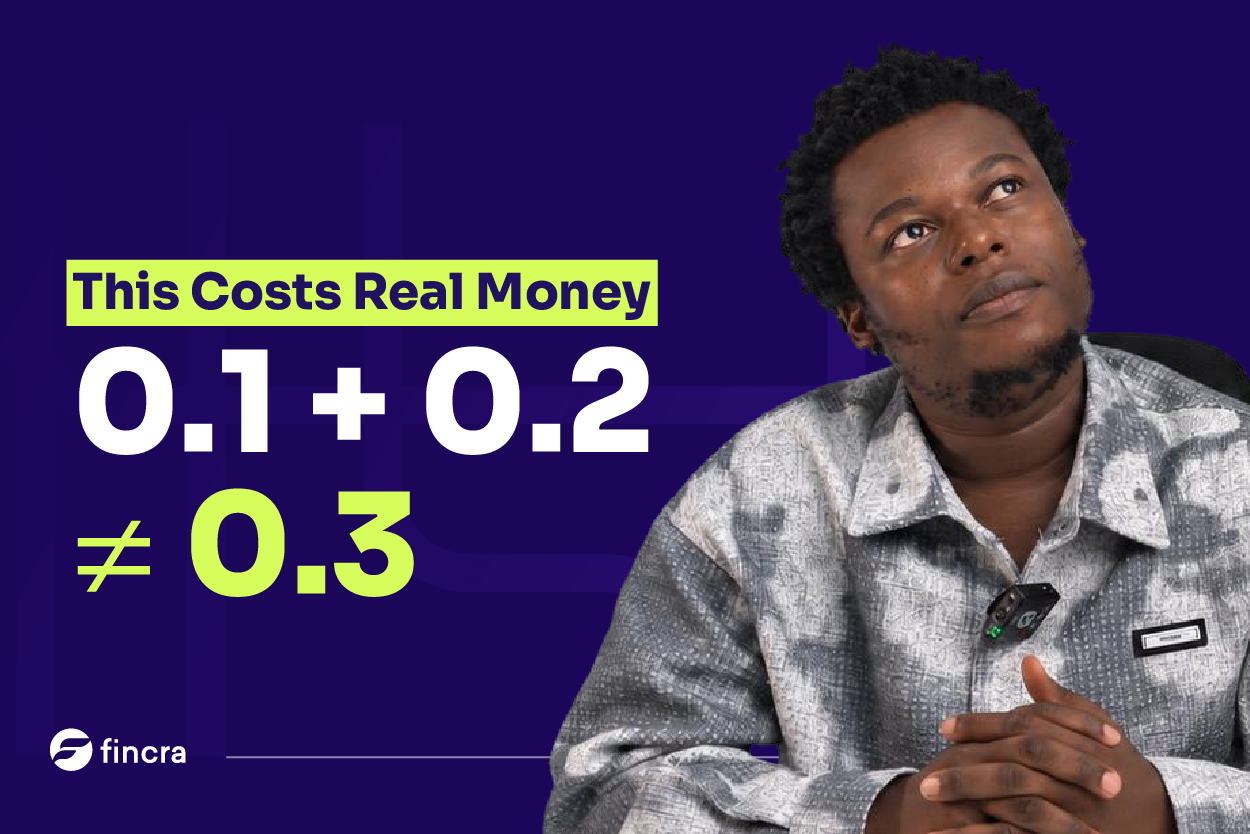
Ask a computer to add 0.1 and 0.2. It won’t give you 0.3. Now imagine that happening to your money, thousands of times a day. Fincra’s Engineering Lead breaks down why and how fintechs design around it. Watch the full breakdown.
Capital Markets
Sidama Bank becomes Ethiopia’s seventh stock exchange listing
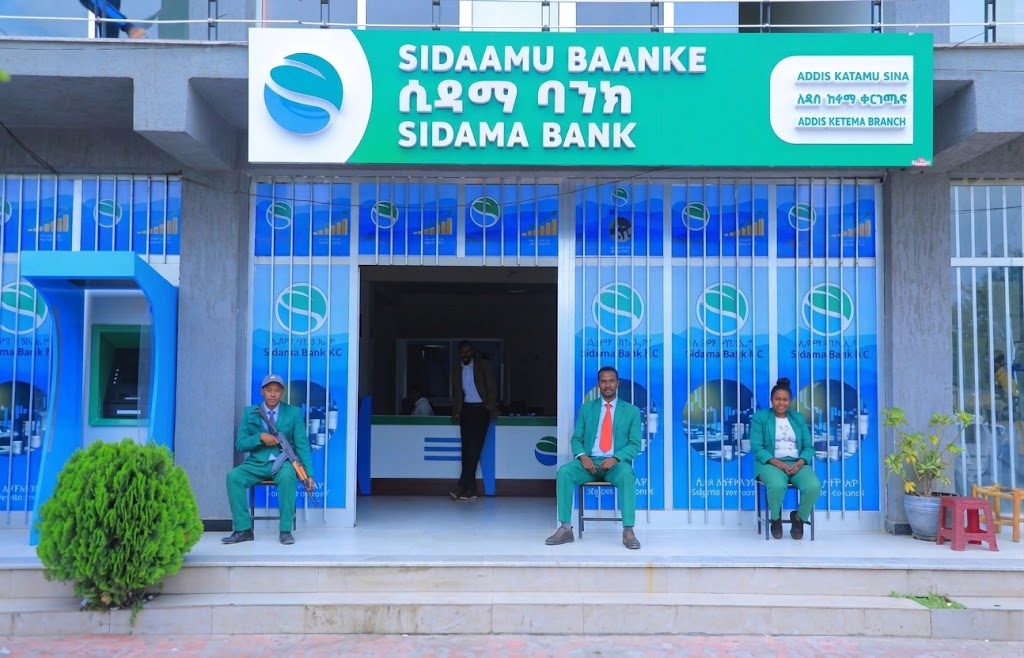
Sidama Bank, the Ethiopian lender that started as a microfinance institution, has become the seventh company to list on the Ethiopian Securities Exchange (ESX). Six of the seven listed companies are now banks. Ethio Telecom, the state-owned telecom company, is the only other Main Market listing.
Explain like I’m new here: Ethiopia only got a functioning stock exchange in January 2025, after more than five decades without one. Wegagen Bank was the first listing. Gadaa Bank followed, then Awash Bank, Ethio Telecom, Abay Bank, Bank of Abyssinia, and now Sidama.
So why banks? Partly because Ethiopia already had the raw material for a stock market: shareholding banks. Unlike many large private companies, banks have spent years building large shareholder bases. Listing gives those shareholders a regulated place to buy and sell their stakes.
There is also a bigger reason. Ethiopia is raising the amount of capital banks need. The National Bank of Ethiopia raised the minimum paid-up capital for banks to ETB 5 billion ($32 million) in June, while new risk-based capital rules are pushing banks toward Basel II and III standards. Foreign banks are also being allowed into the market, increasing the pressure to build stronger institutions.
How are they listing? So far, many bank listings have simply admitted existing shares for trading rather than raising fresh money. Abay and Awash, for example, registered existing shares with no new shares offered. Bank of Abyssinia did plan a new share offering alongside its existing shares.
Ethio Telecom, the country’s largest telecom operator, was different. Its listing followed a public offering that drew over 47,000 investors.
Between the lines: So far, the pattern we’re seeing in the first phase of Ethiopia’s stock exchange run is about creating a price and trading system for ownership that already exists. The next phase could be about bringing more companies to market, particularly businesses that need public capital to grow, while creating enough liquidity for nimbler companies, including tech firms, to list. But suffice to say that Ethiopia is not there yet.
Zoom out: Once that plumbing works, the ambition gets much bigger; more companies raising capital outside banks, more citizens owning businesses, and eventually a market capable of financing Ethiopia’s next wave of growth. The banks are not just the first listings. They are helping teach the country how a public market works.
Your stablecoins can now earn up to 7%

As stablecoin use grows across emerging markets, Raenest is expanding what users can do with USDC and USDT. In addition to sending and spending stablecoins globally, Raenest has launched Stablecoin Vault, which lets eligible users earn up to 7% variable APY. Learn more at www.raenest.com.
Ecommerce
Spar is giving its South African grocery delivery service a makeover

Ordering groceries from an app and having them show up at your door sounds pretty simple. Behind the scenes, it is anything but. Spar, the South African chain supermarket, is finding that out the hard way.
What happened? The retailer will begin piloting a new version of Spar2U, its on-demand grocery delivery service, in December. The company said it is part of a recovery plan that will also cover its own-brand products, merchandising, pricing, marketing and retail technology.
Why does Spar2U need a refresh? Spar stores are independently owned. Retailers buy stock from Spar’s distribution centres but run their own stores, so the company has to make the service work across a network of different retailers. Spar said it developed the refreshed service with retail guild representatives, who spent two days working through the operational challenges of running Spar2U across that network.
Explain like I’m new here: In 2022, Spar launched the delivery service when retail consumers were developing a preference for door-to-door deliveries after COVID-19 restricted movement. Since 2019, Shoprite, its South African competitor, has operated Checkers Sixty60, which recently became a $1.6 billion business. Other supermarket chains, such as Pick n Pay and Woolworths, have comparable delivery services.
Since 2022, Spar2U has expanded exponentially, according to Spar, reaching 500 retail stores in 2025 and growing orders by 285% year-on-year.
Spar hasn’t disclosed whether the refreshed Spar2U will mean a different app, delivery model, pricing, store coverage, or customer experience. But involving retailers in the redesign points to a bigger issue: making an on-demand service work consistently when the stores are fulfilling independently run orders. The refresh is Spar’s attempt to close that gap.
Don’t miss Moonshot 2026 for anything in the world!

True scale demands moving beyond surface-level integrations to robust execution. We’ve filtered the noise out of Moonshot 2026, optimising the conference strictly for high-calibre connections between startup founders, global financial operators, enterprise leaders and individuals rewiring Africa’s technical frameworks. Join us on October 28 & 29, 2026. Get your ticket.
Economy
Kenya wants to export more to Germany

Kenya is taking 21 exporters to Germany for three weeks of buyer meetings and market training, with the government urging companies to move beyond raw coffee, avocados, tea, and other agricultural commodities into processing, packaging, and branding.
Explain like I’m new here: Germany is a significant trade market for Kenya: its exports to Germany reached $164.8 million in 2025, with coffee alone accounting for 31%. Yet, Germany shipped $405.4 million worth of goods to Kenya, leaving a sizable trade gap.
So what’s changing? Kenya has already solved part of the export problem. Its trade deal with the European Union, under the Economic Partnership Agreement, gives Kenyan goods duty-free, quota-free access to the bloc. But the problem is building products that can bring in more money once exported.
Think coffee. Kenya can export green beans and let companies elsewhere roast, package, brand, and sell them. The same logic applies to an avocado that becomes oil or a packaged food product. More production can increase export volumes, but processing and branding determine how much of the final value Kenya captures.
Zoom out: Germany’s support for irrigation in western Kenya could help farmers produce more. But Kenya’s export strategy is increasingly becoming a question of what happens after the farm. The next step is not simply getting more Kenyan products into Europe. It is getting more Kenyan companies into the higher-value businesses built around those products.
CRYPTO TRACKER
The World Wide Web3
Source:

|
Coin Name |
Current Value |
Day |
Month |
|---|---|---|---|
 Bitcoin Bitcoin |
$83,158 |
– 0.30% |
+ 6.57% |
| Ether |
$2,672 |
+ 0.46% |
+ 8.76% |
| Chainlink |
$14.76 |
+ 5.79% |
+ 25.59% |
| Solana |
$117.86 |
– 1.85% |
+ 12.24% |
* Data as of 05.25 AM WAT, September 29, 2026.
Opportunities
- The Citi Foundation is offering $500,000 grants to 50 organisations that help low-income young people build AI and other job skills. The grants can support programmes that teach skills such as prompt engineering and digital content creation, help young people find jobs, provide access to devices and software, or add AI tools to existing employment programmes. Applications close on October 6, 2026, at 5 p.m. Lagos time. Apply here.

Written by: Emmanuel Nwosu and Yemi Kareem
Edited by: Emmanuel Nwosu & Ganiu Oloruntade
Want more of TechCabal?
Sign up for our insightful newsletters on the business and economy of tech in Africa.
- The Next Wave: futuristic analysis of the business of tech in Africa.
- Francophone Weekly by TechCabal: insider insights and analysis of Francophone’s tech ecosystem
P:S If you’re often missing TC Daily in your inbox, check your Promotions folder and move any edition of TC Daily from “Promotions” to your “Main” or “Primary” folder and TC Daily will always come to you.

from TechCabal https://ift.tt/1SbqrEO
via IFTTT

I am the CEO of 9JAGISTLAND.My name is Adedeji Timothy and my co-owner is Oyekola Damilare.This blog is born out of our passion to educating to people in all aspect of internet life.We are enthusiastic about writing posts and articles online.
« Prev Post
Next Post »
Write your views on this post and share it. ConversionConversion EmoticonEmoticon