



Good morning. 
Our sister publication, Zikoko, is bringing back the Naira Life Conference, and we’re excited to see Yield by Credit Direct join as Headline Sponsor for the 2026 edition. Visit the Yield booth on the conference day to complete fun activities, earn Yield Naira points, and win instant prizes and cash rewards.
Download the Credit Direct app, activate your Yield account with the referral code Nairalife26, and get a head start on earning points before the event.
Don’t miss your chance to learn, connect, and build wealth at the Naira Life Conference on August 22 at Jewel Aeida, Lekki, Lagos. Secure your ticket today.

The biggest retail market in Francophone Africa is hiding in plain sight. While modern supermarkets grab attention, up to 90% of consumer goods still move through informal markets and neighbourhood stores. TechCabal’s latest Francophone Weekly edition explains why investors see these businesses as the foundation of the region’s next commerce boom. Read it here first or subscribe below.

Telecoms
Airtel Africa wants to nullify 13.7 million repurchased shares permanently
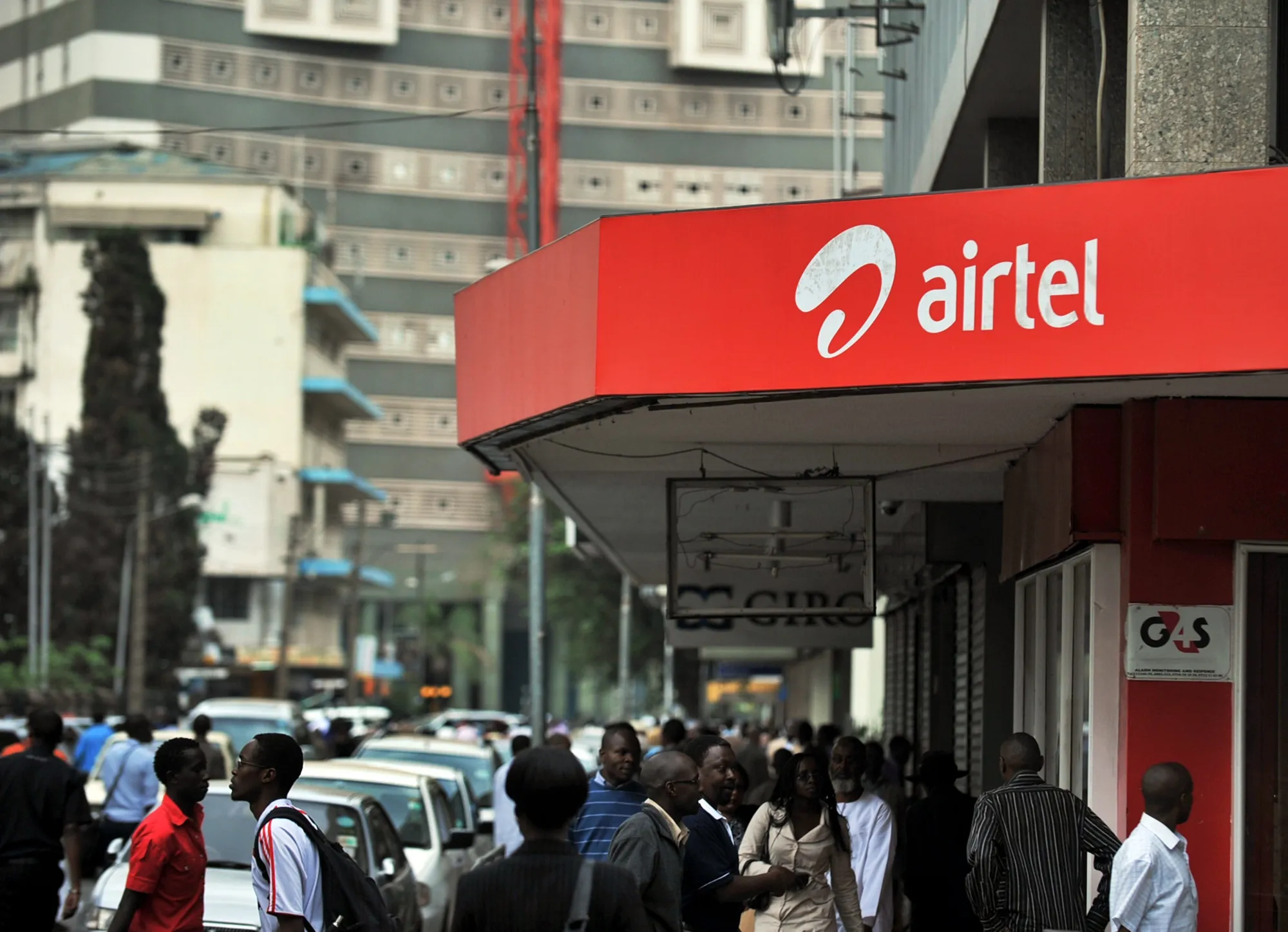
Think of shares as ownership certificates. Every share represents a tiny piece of the company. Airtel, one of Africa’s largest telecom companies operating in 14 countries, has been buying back some of those certificates—and tearing them up so they no longer count.
What happened: Airtel Africa has spent the past two months buying back its own shares from investors. So far, it has bought 13.7 million shares.
Here’s the twist: it isn’t buying them so it can keep them. It’s buying them to erase them permanently.
Explain like I’m new here: The plan began in May, and between July 13 and July 17, the telco bought back over 800,000 shares. The buy–back programme is targeting 1% of Airtel’s issued capital, which means there could be more buy-backs in future.
How does this benefit shareholders? Imagine Airtel has 10 shares in existence, and you own one of them; it means you own 10% of the company. If Airtel buys back two shares from other investors and cancels them, there are now only eight shares left. You still own just one share (you haven’t bought anything extra), but your ownership has increased from 10% (1 out of 10) to 12.5% (1 out of 8) because there are fewer shares in circulation.
Why is Airtel destroying the shares? If Airtel held on to those shares, it could reissue or sell them later, increasing the number of shares again and diluting existing investors. Cancelling them makes the reduction permanent. For retail investors who keep their shares, that means each share represents a slightly larger stake in the company and a bigger claim on its future profits. It also means future profits are spread across fewer shares. Even if Airtel earns the same amount of money next year, earnings per share (EPS), a measure of how much profit is attributable to each outstanding share, could still increase because fewer shares are sharing the same profits.
Doesn’t Airtel need the cash it would have gotten from selling the shares? Airtel seems confident. Despite spending about $100 million on buying back shares, it has more than tripled capital spending to $389 million in Q2 2026. The company also noted that it built over 920 new network sites and expanded its fibre network to 82,100 kilometres. Airtel is also preparing to list Airtel Money, its fintech arm, on the London Stock Exchange (LSE) later this year to unlock capital.


Getting paid in cedis just got easier for African businesses operating in Ghana.

Fincra now issues dedicated GHS virtual accounts to enable businesses to collect payments. See how Fincra GHS virtual accounts work.
Mobility
South Africa’s Cape Town is putting electric buses on its roads

Cape Town has launched its first battery-powered MyCiTi bus, becoming the first South African city to put electric buses (e-buses) on the road for public use.
On July 24, Geordin Hill-Lewis, the city’s mayor, unveiled the Volvo BZRLE e-buses at Khayelitsha, a southeastern town in Cape Town, South Africa. An initial 38 of those buses will immediately be deployed on South African roads, with more batches scheduled for March 2027.
South Africa’s car manufacturing ambitions are working: The Volvo e-buses, nicknamed “Evie,” were partly manufactured in South Africa, with their frames assembled locally, making them the first electric buses produced in South Africa specifically for local roads. They will operate on routes linking Mitchells Plain, Khayelitsha, Wynberg, Claremont, and Cape Town’s CBD as part of the R7.2 billion ($427 million) MyCiTi Phase 2A expansion, which will extend the bus network to more than 30 communities.
Explain like I’m new here: Cape Town has been testing electric buses since 2020, when Golden Arrow Bus Services began piloting them. Golden Arrow now has over 80 electric buses on the road. Cape Town’s MyCiTi fleet is catching up. The city is partnering with the University of Cape Town (UCT), one of the country’s top universities, on a 12-month research programme to study battery performance and charging times before rolling out the full fleet.
The bigger picture: South Africa has lost roughly half its oil-processing capacity in recent years as refineries closed; it now imports the bulk of its refined fuel, becoming Africa’s largest fuel importer. An electric fleet hedges against transport complications that could arise from fuel issues.
But there is a catch: National Treasury is phasing out the Public Transport Network Grant that funds Bus Rapid Transit (BRT) systems, with R8.4 billion ($500.9 million) in cuts over three years. Hill-Lewis warned that the MyCiti expansion depends on continued national funding. Cape Town accounts for roughly 42% of all BRT passenger trips in South Africa.
Download PalmPay. Bank smarter.

Transaction Guard lets you set single, daily, or monthly transaction limits. Whenever a transaction exceeds your chosen limit, facial verification is required before it can be completed, helping to prevent unauthorised transfers. With PalmPay, you stay in control. Learn more.
Cryptocurrency
Kenya finalises crypto rules for digital asset firms

Since March when Kenya’s National Treasury opened the draft regulations for public comment, it has taken four months of back-and-forth and arguing the fine print, but this almost feels unbelievable to write: Kenya has become one of the African countries with the most complete regulations for cryptocurrency businesses, including exchanges, wallet providers, token issuers, custodians, and stablecoin companies that want to operate in the digital asset space.
What happened? On Friday, Kenya gazetted its Virtual Asset Service Providers (VASP) Regulations, completing the legal framework that began with the VASP Act last year. Crypto exchanges, wallet providers, stablecoin issuers, tokenisation platforms, and other digital asset firms can now apply for licences and operate under formal supervision. Oversight will be split between the Central Bank of Kenya (CBK), which will regulate crypto-to-fiat services and stablecoins, and the Capital Markets Authority (CMA), its capital markets regulator, which will oversee exchanges, token offerings, and tokenised assets.
Explain like I’m new here: For years, crypto businesses have operated in an awkward middle ground. They weren’t exactly illegal, but they also weren’t recognised financial institutions. That made everything harder, from opening bank accounts to attracting institutional investors and launching new products. Getting access to banking services in Kenya was also notoriously difficult after CBK warned financial institutions against “dealing with virtual currencies or transacting with entities that are engaged in virtual currencies” in 2015.
It meant crypto operators have, for years, had to be really creative, surviving through workarounds, such as peer-to-peer transactions and payment service providers willing to support them. Those providers took the risk because onboarding more businesses meant more revenue.
Kenya has now answered a question that regulators around the world have been wrestling with: if crypto is becoming part of everyday finance, should it keep living outside the financial system? Its answer is no. Instead of treating digital assets as something separate, the country has folded them into its existing financial architecture, with the central bank regulating money-like products and the capital markets regulator supervising investment products.
Why does it matter? Kenya isn’t the first country to regulate crypto, but it is following a playbook that is becoming the global standard. The European Union’s Markets in Crypto-Assets (MiCA) regime, Dubai’s dedicated crypto regulator (Virtual Assets Regulatory Authority), and even Nigeria’s more recent executive order on virtual assets have all moved in the same direction: don’t ban crypto, supervise it.
That shift changes who gets to participate. Regulation inevitably raises compliance costs, but it also lowers another cost that has haunted the industry for years: uncertainty. Banks become more willing to work with licenced firms. Institutional investors become more comfortable deploying capital. Global exchanges have a clearer path to entering the market rather than wondering whether tomorrow’s regulator might pull the rug from under them.
Zoom out: The biggest crypto story in Africa is no longer adoption. That battle has already been won. The next chapter is about who gets to build the infrastructure around it. Countries are competing to become the jurisdiction where the next Coinbase, Kraken, HTX, or stablecoin issuer like Tether chooses to set up shop. Kenya has just made its pitch. Let’s see which operators play.
Zoho – Your growth partner.

Zoho is built for Nigerian businesses with local pricing that makes sense. No dollar stress. No conversion chaos. Just tools for Sales, Finance, Marketing, HR, Support and more—all in one place. Learn more.
TAX
Kenya’s eTIMS outage lasted longer than planned

What was supposed to be a 20-hour maintenance window for Kenya’s electronic tax invoicing system has turned into a multi-day outage, leaving thousands of businesses unable to generate the invoices they are legally required to produce.
The Kenya Revenue Authority (KRA), the country’s taxman, announced that the Electronic Tax Invoice Management System (eTIMS) and its predecessor, TIMS, would be down from 6 pm on July 22 to 2 pm the next day. By the afternoon of July 24, the system was still offline. KRA issued a second notice citing a technical hitch and said its team was working on it.
On Saturday, the KRA updated on X that the service was back up and running. However, reactions under that post showed that some taxpayers were still locked out.
Explain like I’m new here: Since at least 2014, when it launched the iTax platform, Kenya has been trying to digitise tax collection processes, aiming to reduce its well-documented high non-compliance rates that persist today. eTIMS, launched in 2023, was the taxman’s way of making it difficult for businesses to hide taxable transactions. Since January 2024, the KRA has made it mandatory that only expenses backed by eTIMS invoices are eligible for tax deduction.
The Finance Act 2026, signed into law on June 23, has further tightened enforcement, with minimum penalties of KES 100,000 ($770) for companies and KES 10,000 ($77) for individuals who fail to use the system. Every invoice generated through the system is transmitted to KRA in real time, giving the tax authority visibility into who sold what, when, and for how much. For businesses, this means you cannot claim an expense as a tax deduction unless the invoice was generated through eTIMS. For KRA, it means the days of relying on self-reported tax returns are ending.
Why this matters: With prolonged downtime that began as a routine maintenance check, businesses are left sitting on their hands, unable to file their expenses. They cannot issue compliant invoices. They cannot claim deductible expenses. They cannot prove what transactions happened. There is now a gap between what occurred and what eTIMS recorded. This is the risk of making a single government platform the gatekeeper for all business invoicing. When it works, it works well. When it does not, everyone waits.
Zoom out: Kenya is building one of Africa’s most ambitious real-time tax surveillance systems. But the eTIMS outage is a reminder that the system’s usefulness depends entirely on whether it stays online.
Invest in Pivot Integrated Energy Services’ ₦100bn Commercial Paper

Pathway Advisors announces the opening of Pivot Integrated Energy Services’ ₦100bn Series 1 Commercial Paper under its ₦300bn Programme. The offer closes July 31, 2026, providing investors an opportunity to support a leading downstream energy company. Email our team.
CRYPTO TRACKER
The World Wide Web3
Source:

|
Coin Name |
Current Value |
Day |
Month |
|---|---|---|---|
 Bitcoin Bitcoin |
$65,358 |
+ 1.44% |
+ 8.33% |
| Ether |
$1,878 |
+ 3.97% |
+ 24.22% |
| WEMIX |
$0.2147 |
– 8.04% |
– 6.75% |
| Solana |
$76.36 |
+ 1.76% |
+ 6.54% |
* Data as of 06.42 AM WAT, July 27, 2026.
JOB OPENINGS
- ARM — Funding Accounting Officer — Lagos, Nigeria
- Scouthappy— Growth Product Manager — Remote (Nigeria)
- Chowdeck— Junior Accounting Associate, Senior Mobile Engineer, Customer Support Representative, Inventory Manager, DevOps Engineer, and multiple roles — Hybrid (Lagos, Abuja, Port Harcourt, Ibadan, Nigeria)
- Binance— General Manager, West Africa — Remote (Africa)
- Pesa— Brand and Content Specialist — Remote (Nigeria)
Looking for more opportunities? There are additional openings on TechCabal’s job board. We’ve also cleared out outdated listings to keep opportunities fresh for job seekers. If you’re hiring and would like to feature an open role, please submit it via this form.

- Anne-Kinuthia Otieno, Airtel Money Kenya’s managing director, is stepping down
- Digital Nomads: Eseandre Otomiewor built a $100,000 business. Then started over in the US.
- “The problem was much bigger than we anticipated it to be”: Day 1-1000 of Mida
- Fed up with Big Tech, communities turn to data collectives for control
Written by: Opeyemi Kareem, Zia Yusuf, and Emmanuel Nwosu
Edited by: Emmanuel Nwosu & Ganiu Oloruntade
Want more of TechCabal?
Sign up for our insightful newsletters on the business and economy of tech in Africa.
- The Next Wave: futuristic analysis of the business of tech in Africa.
- Francophone Weekly by TechCabal: insider insights and analysis of Francophone’s tech ecosystem
P:S If you’re often missing TC Daily in your inbox, check your Promotions folder and move any edition of TC Daily from “Promotions” to your “Main” or “Primary” folder and TC Daily will always come to you.


Write your views on this post and share it. ConversionConversion EmoticonEmoticon