

TGIFCDEUTWSWGANW. 
Who’s hiring this week? We did a bit of snooping around on Elon Musk’s Internet. Chowdeck, Pesa, Binance, and ARM are all hiring this week. Check the updated list on our job board.
Let’s dive in.
—Emmanuel
Get smarter about Francophone Africa with our newsletter, Francophone Weekly—the startups, tech policies, and institutions building the pipelines for ecosystem growth.


FEATURES
Quick Fire  with Zubair Timilehin

Zubair Habib Timilehin is the founder and chief executive officer (CEO) of Bitoshi, a fintech startup building the infrastructure that makes digital assets and stablecoins practical for everyday payments across Africa. Under his leadership, Bitoshi has grown to serve nearly 100,000 users, delivering financial solutions that bridge traditional finance and blockchain technology while enabling individuals and businesses to transact in Africa’s digital economy.
- Explain your job to a five-year-old.
Imagine you have two toys. One is really fun, but every time you want to play with it, you have to read a big instruction manual first. The other is so simple that you can pick it up, start playing straight away, and discover all the fun things it can do on your own.
My job is to help build money tools that feel like the second toy.
I want people to be able to send, save, and use their money—whether it’s cash or digital—without needing to think about the technology behind it. If we’ve done our job well, people won’t think about how it works; they’ll simply know it works.
- What’s the hardest part of being a founder in the digital asset space that people outside crypto don’t understand?
I think the hardest part is building in an industry that’s evolving in real time.
The technology moves incredibly fast. New blockchain networks and upgrades, security standards, and infrastructure are constantly emerging, so you’re always learning. What was considered best practice a year ago may no longer be the best approach today.
But the bigger challenge is trust. Digital assets have unfortunately been associated with scams and bad actors over the years. As a result, legitimate businesses have to work twice as hard to earn customer trust and maintain regulatory compliance.
You’re not just building a great product. You’re building a secure, compliant, and trustworthy business in an industry that’s still maturing. That’s a challenge most people outside the space don’t fully appreciate.
- You said Bitoshi bridges traditional finance and blockchain for nearly 100,000 users. What was your hack for achieving that scale?
The biggest driver of our growth has been word of mouth. We never set out to build a product that people would talk about; we simply set out to solve the complication and fragmentation of cryptocurrency transactions.
By staying focused on solving a real problem and delivering a seamless user experience, people naturally began recommending Bitoshi to their friends, family, and colleagues. That organic advocacy has been our biggest growth hack.
- If being a crypto startup founder was a warning label, what would it read?
Don’t get too comfortable. Expect the best, but always prepare for the worst.


Getting paid in cedis just got easier for African businesses operating in Ghana.

Fincra now issues dedicated GHS virtual accounts to enable businesses to collect payments. See how Fincra GHS virtual accounts work.
companies
South African retailer Mr Price takes control of NKD’s European operations

Imagine going on holiday and deciding, on a whim, to buy the local bakery and stay forever. That’s essentially what Mr Price has done with its latest European expansion.
The South African retailer has taken control of NKD, a German retail company it agreed to acquire in 2025. The deal adds 2,156 stores across seven European countries to Mr Price’s portfolio, previously operated by NKD under its parent company, Pegasus Holding Group, which was also part of the acquisition.
What happened? Mr Price announced the R9.6 billion ($569 million) acquisition in December 2025, but it only became the owner of NKD in March 2026, after securing approvals from the South African Reserve Bank (SARB) and European regulators.
From that point, NKD became part of the Mr Price Group. In Q1 2026, the South African retailer’s sales jumped 45.3% to R13.1 billion ($776 million), with NKD contributing R3.8 billion ($225 million) in cash sales, helping offset a much slower 3.2% sales increase in Mr Price’s South African business.
Explain like I’m new here: For years, South African retailers have sought other growth avenues outside their core clothing and grocery businesses. Several companies in the same—or adjacent—bracket as Mr Price, such as Shoprite, Pepkor, Pick n Pay, Woolworths, and SPAR, have all tried other businesses, including telecoms (mobile virtual network operator), mobile phones, and even scaled-down banks.
Another pattern is continental expansion. While the likes of Shoprite and SPAR have pulled back from certain foreign markets, Mr Price thinks there’s value in Europe’s retail economy. The continent offers something South Africa has struggled to provide in recent years: relatively predictable consumer demand.
While economic growth across the Euro area has remained modest, inflation has eased from the highs seen after the 2021-2022 energy crisis, and unemployment has remained relatively low, giving retailers a more predictable environment to operate in. For value retailers, that makes planning inventory, pricing, and margins a lot easier.
South Africa, on the other hand, has spent the past few years contending with uneven growth rates, high unemployment, elevated borrowing costs, and electricity shortages that have weighed on household spending.
Why now? The maths of the deal is starting to make sense. WhileSouth African sales grew a modest 3.2%, the inclusion of NKD has supercharged the group’s overall growth. The acquisition is a hedge against a stagnating home market. Unlike previous South African retail ‘vacations’ that ended in retreat, Mr Price is betting that the value market is universal; people may stop buying luxury during inflation, but they never stop buying affordable socks.
Download PalmPay. Bank smarter.

At PalmPay, your security is our priority. We use advanced security technology to protect your money and personal information. Bank safely and confidently with PalmPay, where every transaction is protected every time. Learn more.
companies
Airtel Money is targeting a public listing in London

Airtel Money, the mobile money business of Airtel Africa that operates in 14 countries, was supposed to go public this year. In May, it suddenly hit the brakes. Well, the company has dusted itself off, picked the London Stock Exchange, and says it’s ready to try again.
Explain like I’m new here: An initial public offering (IPO) is when a private business sells shares to the public for the first time, allowing anyone to own a piece of the company. Airtel Money initially planned to list in the first half of 2026, but it held off in May.
Why did it press pause? Airtel Money blamed unfavourable market conditions and geopolitical shocks, particularly the conflict involving Iran, Israel, and the United States that pushed oil prices higher and disrupted supply chains.
When markets are shaky, companies often delay IPOs because a weak debut can mean raising less money than expected. Several companies, including Digi and Turkish Airlines, delayed their IPOs as investors became more cautious. Now, geopolitical tensions have eased somewhat and global IPO activity has picked up.
Why did Airtel Money choose London? You must be wondering why an African company is seeking to list in London. The London Stock Exchange (LSE) is home to several companies with African roots, including Airtel Africa, Seplat Energy, and Helios Towers. London’s stock market is showing early signs of recovery. In H1 2026, seven IPOs raised £577 million ($656 million), about a threefold increase in proceeds compared to the previous year.
Here’s what we know (and don’t know) about the IPO: Airtel, the telecom giant, hasn’t confirmed its valuation, how much it hopes to raise, how many shares it plans to sell, or even the exact listing date. The IPO could value Airtel Money at around $10 billion and raise about $1.5 billion, but those figures remain estimates.
What Airtel has confirmed is that the business keeps getting bigger. Airtel Money now serves 56.5 million customers and generated $404 million in revenue in Q2 2026. Now comes the part where it has to convince global investors that Africa’s mobile money story is worth buying into.
Naira Life 2026 is here!
The theme for this year’s Naira Life Conference by Zikoko is “All About Wealth.”
Join 2,000+ in Lagos on August 22 for a day of practical money conversations and workshops designed to move you from simply earning an income to building lasting wealth. Get 15% off early bird tickets.
insights
Funding tracker

Mylerz, an Egyptian logistics startup, raised $2 million in debt and equity funding. The round was led by Lorax Capital Partners, with participation from Fawry and existing investors. (Jul 21)
Here is the other deal for the week:
- Reme-D, an Egyptian healthtech startup, raised $1.45 million in a pre-Series A funding round led by Anara Impact Capital, with participation from Global Innovation Fund, Africa Health Ventures and several other investors. (Jul 20)
That’s all for this week. Before you go,here’s what we covered in the launch of our State of Tech in Africa Review for H1 2026. Find out more here. Follow us on Twitter, Instagram, and LinkedIn for more funding announcements.
Showcase Your Brand at Moonshot by TechCabal
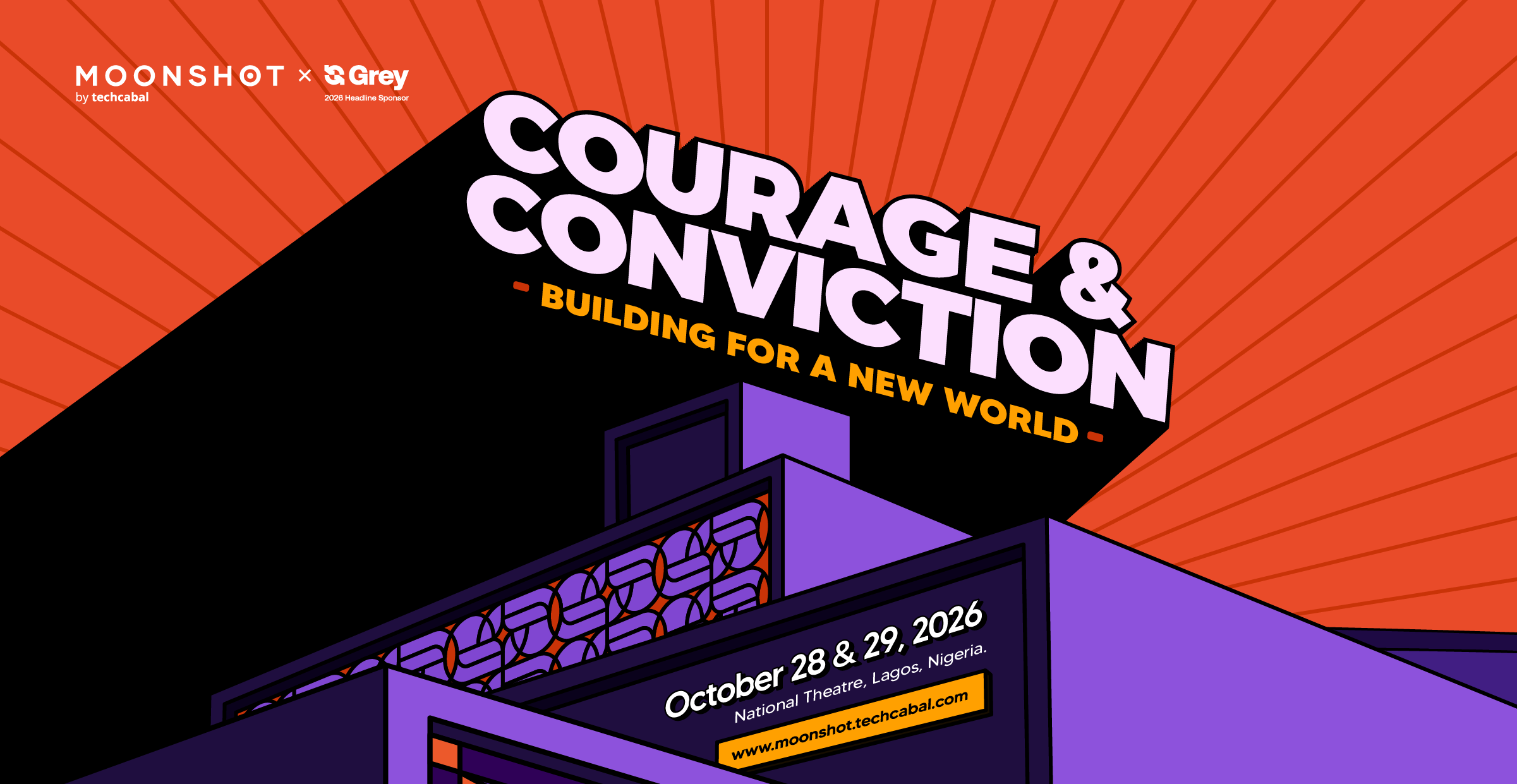
Founders. Investors. Policymakers. Enterprise leaders. Moonshot 2026 brings together the people shaping Africa’s technology ecosystem across AI, commerce, climate, enterprise, and culture. Spotlight your brand today.
CRYPTO TRACKER
The World Wide Web3
Source:
|
Coin Name |
Current Value |
Day |
Month |
|---|---|---|---|
 Bitcoin Bitcoin |
$65,243 |
– 0.71% |
+ 3.88% |
| Ether |
$1,878 |
– 2.45% |
+ 12.40% |
| XRP |
$1.10 |
– 2.50% |
+ 0.42% |
| Solana |
$75.75 |
– 2.43% |
+ 8.37% |
* Data as of 06.35 AM WAT, July 24, 2026.
JOB OPENINGS
- ARM — Funding Accounting Officer — Lagos, Nigeria
- Scouthappy— Growth Product Manager — Remote (Nigeria)
- Chowdeck— Junior Accounting Associate, Senior Mobile Engineer, Customer Support Representative, Inventory Manager, DevOps Engineer, and multiple roles — Hybrid (Lagos, Abuja, Port Harcourt, Ibadan, Nigeria)
- Binance— General Manager, West Africa — Remote (Africa)
- Pesa— Brand and Content Specialist — Remote (Nigeria)
Looking for more opportunities? There are additional openings on TechCabal’s job board. We’ve also cleared out outdated listings to keep opportunities fresh for job seekers. If you’re hiring and would like to feature an open role, please submit it via this form.

Written by: Opeyemi Kareem and Zia Yusuf
Edited by: Emmanuel Nwosu & Ganiu Oloruntade
Want more of TechCabal?
Sign up for our insightful newsletters on the business and economy of tech in Africa.
- The Next Wave: futuristic analysis of the business of tech in Africa.
- Francophone Weekly by TechCabal: insider insights and analysis of Francophone’s tech ecosystem
P:S If you’re often missing TC Daily in your inbox, check your Promotions folder and move any edition of TC Daily from “Promotions” to your “Main” or “Primary” folder and TC Daily will always come to you.

Write your views on this post and share it. ConversionConversion EmoticonEmoticon