


Good morning. 
If you’ve lost count, it’s 16 days to Moonshot 2026. And if Lagos Life, the Sims-style browser game, crossing 10 million users in eleven days is anything to go by, there’ll be plenty to talk about: products can still spread very fast when they hit the right nerve. You can still get Moonshot tickets here.
Before you scroll, one quick favour: help us make TC Daily better. Tell us what you love, what you skip, and what you want more of. Share your thoughts here.
Read smart insights about Francophone Africa’s tech ecosystem—weekly.

Fintech
Standard Bank takes stake in OPay ahead of US listing
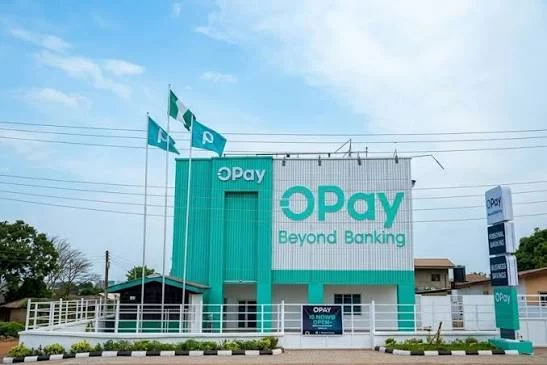
Nearly two months after Standard Bank, Africa’s largest lender, began talks to acquire a stake in OPay, the bank is putting money behind its interest.
The bank is investing about $185 million in OPay, the Nigeria-focused fintech backed by SoftBank, as the company prepares to list in New York.
What’s buzzing? Bloomberg reported on Friday that Standard Bank will buy shares in OPay through a private placement running alongside its initial public offering (IPO). OPay’s F-1 filing on Friday puts the investment at up to $200 million, but Standard Bank’s final cheque will depend on exchange rates, its regulatory capital, and OPay’s IPO price. Its stake cannot exceed 4.99%, and the shares will be locked up for 12 months.
Explain like I’m new here: OPay has applied to list American depositary shares on the New York Stock Exchange (NYSE) under the ticker “OPAY.” Unlike recent African listings where existing shareholders sold shares and pocketed the proceeds, OPay is issuing new shares. Money from both the IPO and Standard Bank’s investment will go into the company.
Between the lines: Standard Bank is buying more than equity. The two companies also plan to work together on merchant payments, foreign exchange, and wealth products. Standard Bank’s Africa chief executive officer, Lungisa Fuzile, will also join OPay’s board.
OPay gets capital, banking relationships, and a heavyweight institutional investor before asking public investors to buy in. Standard Bank gets exposure to a fintech with more than 50 million monthly active users without building that distribution itself.
Zoom out: In H1 2026, OPay’s revenue more than doubled to $806 million year-on-year; 89.5% of its revenue came from Nigeria. The fintech’s IPO would give investors another way to buy into African digital finance. A possible Nigerian listing later could bring some of that ownership closer to the market where OPay built its scale.


Happy customer service week.

Your success and ours are the same story. Happy Customer Service Week. This year’s theme is The Extra Mile, and it’s the only way we know how to do this. Visit: fincra.com.
Fintech
Airtel Money falls below its IPO price after London debut
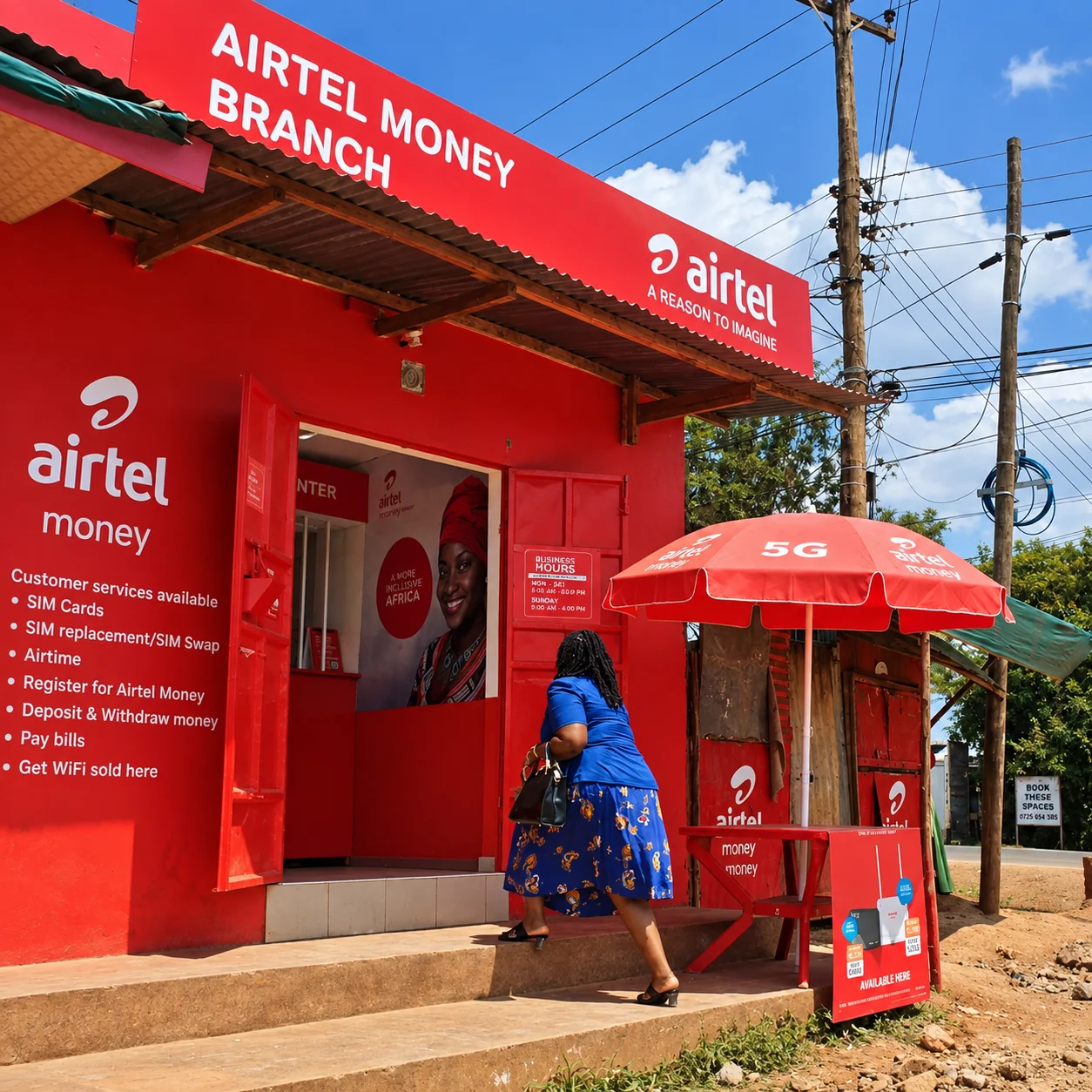
On Friday, Airtel Money, Airtel Africa’s mobile financial services business, listed conditionally on the London Stock Exchange (LSE) amid significant hype. The offer opened to institutional investors ahead of its general public listing on October 14.
Investors had ordered several times more shares than were available (an oversubscription), helping London land one of its biggest listings in years.
But the excitement cooled quickly. Airtel Money closed its first trading day below the price investors paid in the initial public offering (IPO).
What happened? Airtel Money priced its shares at 196 pence, valuing the company at £5.3 billion ($7 billion). The shares briefly rose to 200 pence on Friday before closing at 193 pence, about 1.5% below the offer price. Existing investors sold 270 million shares worth £529 million ($703 million), while Airtel Africa kept its controlling stake in the mobile money business.
Explain like I’m new here: Airtel Money had been heading towards this listing for months; it delayed the IPO in May when market conditions worsened, revived the plan in July, and finally came to market in October in London’s biggest first-time listing in five years.
State of play: An oversubscribed IPO—which counted about 100 institutional investors—only tells us that they wanted more shares than were available at 196 pence. Once trading begins, the market gets another say on what the company is worth. Some investors who received shares may sell immediately, while others may refuse to buy above the IPO price.
Between the lines: Friday’s drop was hardly a collapse. Airtel Money had already lowered its ambitions before listing, settling for a $7 billion valuation after previously targeting around $8 billion–9 billion. The bigger price adjustment happened before the shares reached the market. Friday showed investors were not yet willing to push that valuation higher.
What to watch: A Monday bounce is possible, especially if investors who missed out on shares return as buyers, but an oversubscribed IPO does not guarantee one. Full trading begins on October 14. Investors will then judge a business with 53 million monthly active users and $213 billion in transactions processed in the year to June.
Don’t miss Moonshot 2026 for anything in the world!

True scale demands moving beyond surface-level integrations to robust execution. We’ve filtered the noise out of Moonshot 2026, optimising the conference strictly for high-calibre connections between startup founders, global financial operators, enterprise leaders and individuals rewiring Africa’s technical frameworks. Join us on October 28 & 29, 2026. Get your ticket.
Mobility
ARC Ride’s sales surge, but losses grow faster
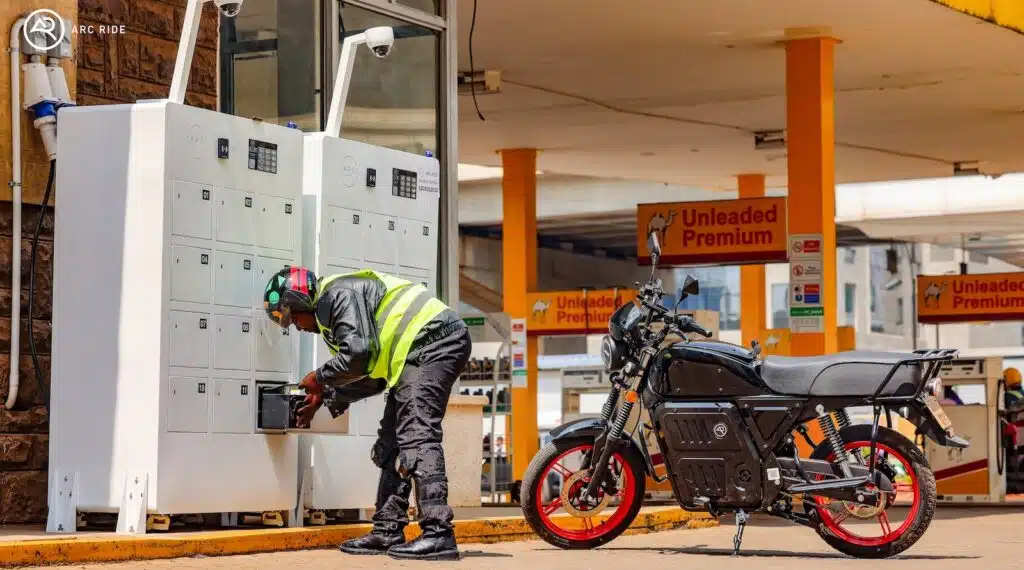
ARC Ride, a Kenya-based electric mobility company that recently expanded into South Africa with an e-bike launch, sold far more motorcycles and battery swaps in 2025. But it also lost far more money.
Its revenue nearly tripled to KES 561.6 million ($4.34 million), while its net loss widened to KES 378.1 million ($2.92 million).
What happened? Motorcycle and product sales more than doubled to KES 380.5 million ($2.94 million). More interestingly, battery swapping revenue jumped more than fivefold to KES 181.1 million ($1.4 million), lifting its share of revenue from 17% to 32%. This shows that battery swapping—and not just putting more bikes on the road—is becoming the real business for e-mobility players.
ARC Ride’s gross margin also edged up to 30.9%. Yet, administrative expenses reached KES 551.9 million ($4.27 million), almost as much as the company’s revenue.
Explain like I’m new here: ARC Ride sells electric motorcycles, but it also operates the stations where riders swap depleted batteries for charged ones. Building that requires an expansive network of batteries, stations, and staff, so riders won’t be stranded when they use ARC’s e-bikes.
The payoff comes later if every motorcycle sold keeps generating recurring energy revenue.
Between the lines: ARC Ride’s problem is no longer simply finding customers. It is making growth pay for itself.
Operations consumed KES 1.37 billion ($10.6 million) in cash last year, more than twice 2024’s burn. Its cash balance still grew because financing brought in KES 2.75 billion ($21.3 million), while outstanding loans rose sharply.
At last year’s 31% gross margin, ARC Ride would need roughly KES 1.8 billion ($13.8 million) in annual revenue just to cover its current administrative costs, assuming those costs did not rise.
What to watch: ARC Ride raised another $33.3 million in September to deploy 5,000 motorcycles and expand its swapping network. The important number now is battery-swap revenue: it needs to keep growing faster than the cost of building the network around it.
E-commerce
Pan-African lender Ecobank has a plan to make Africa-China trades easier

If you’ve ever ordered an item from Temu, you’ve had a tiny taste of the China-to-Africa trade pipeline. Now imagine doing that at an industrial scale, importing electronics, machinery, or containers of goods. Getting the money there without losing extra cash to currency conversions is another. Ecobank, the pan-African banking group that operates in 34 countries, wants to make that part easier.
What happened? Ecobank has opened a new office in Beijing, China, and signed a Memorandum of Understanding (MoU) with China’s Cross-Border Interbank Payment System (CIPS), which processes international payments in Chinese yuan.
Explain like I’m new here: China is one of Africa’s biggest trade partners. Trade between the two corridors reached $348 billion in 2025, growing from 17.7% the previous year. China exported about $225 billion worth of goods to Africa, while imports from the continent totalled roughly $123 billion.
However, African importers—picture those importers in busy tech and gadget markets like Nigeria’s Computer Village or Ghana’s Circle—often need to convert local currency into dollars before converting those dollars into yuan to pay Chinese suppliers. Every conversion can add costs. Ecobank’s Beijing office and CIPS agreement are aiming to shorten that journey.
The yuan wants the spotlight. China has been working to expand the yuan’s use in international trade since the 2000s. In 2015, the country launched CIPS, a payment and settlement system built to ease cross-border yuan transactions.
China has also approved yuan-clearing banks and signed currency-swap agreements to encourage countries and businesses to use its currency in trade. If more countries trade with China, Beijing wants more of those transactions settled in yuan. That could reduce reliance on the dollar, although it does not mean the dollar is about to lose its seat at the table.
Ecobank is not alone in building this route. In November 2025, Standard Bank, Africa’s largest lender, connected directly to CIPS. By July 2026, it had facilitated about $1.2 billion in transactions. Rwanda’s Bank of Kigali joined CIPS in September. Absa, another tier-1 African bank, has also been exploring direct yuan payments.
What does this mean for you? Ecobank’s Beijing office and CIPS agreement could make it easier and cheaper for its customers, including African traders, to pay Chinese suppliers, reducing conversion costs and reliance on dollars. The benefits will depend on how these payment services are rolled out and used.
CRYPTO TRACKER
The World Wide Web3
Source:

|
Coin Name |
Current Value |
Day |
Month |
|---|---|---|---|
 Bitcoin Bitcoin |
$83,958 |
+ 1.19% |
+ 8.69% |
| Ether |
$2,561 |
+ 2.40% |
+ 2.40% |
| XRP |
$1.40 |
– 0.67% |
– 1.96% |
| Solana |
$110.62 |
– 4.27% |
+ 6.15% |
* Data as of 06.37 AM WAT, October 12, 2026.
Job Openings
- Bumpa — Social Media Associate — Lagos, Nigeria
- Paystack — Product Manager, Financial Systems, several other roles — Hybrid (Lagos, Nigeria)
- Paystack — Product Manager, South Africa, Account Manager — Hybrid (Cape Town, South Africa)
- Paystack — Platform Security Engineer — Nigeria, Kenya, South Africa
- Qore — Engineering Specialist, Offensive Security — Lagos, Nigeria
- OPay — PR Strategist — Lagos, Nigeria
- RadioNow — Videographer — Lagos, Nigeria
Looking for more opportunities? There are additional openings on TechCabal’s job board. We’ve also cleared out outdated listings to keep opportunities fresh for job seekers. If you’re hiring and would like to feature an open role, please submit it via this form.

- Lagos Life maker Vatar raises $500,000 one week after launch
- The 20-metre neobank: How Mukuru is solving the gap between receiving cash and spending it
- The Nigerian founders who turned travel frustrations into a fintech
- Shoprite takes on the banking apps with airtime on Sixty60
- PawaPay secures Mozambique payments licence
- What a banker discovered when he started listening to farmers
Written by: Emmanuel Nwosu and Yemi Kareem
Edited by: Emmanuel Nwosu & Ganiu Oloruntade
Want more of TechCabal?
Sign up for our insightful newsletters on the business and economy of tech in Africa.
- The Next Wave: futuristic analysis of the business of tech in Africa.
- Francophone Weekly by TechCabal: insider insights and analysis of Francophone’s tech ecosystem
P:S If you’re often missing TC Daily in your inbox, check your Promotions folder and move any edition of TC Daily from “Promotions” to your “Main” or “Primary” folder and TC Daily will always come to you.

from TechCabal https://ift.tt/eO25frC
via IFTTT

I am the CEO of 9JAGISTLAND.My name is Adedeji Timothy and my co-owner is Oyekola Damilare.This blog is born out of our passion to educating to people in all aspect of internet life.We are enthusiastic about writing posts and articles online.
« Prev Post
Next Post »
Write your views on this post and share it. ConversionConversion EmoticonEmoticon