



Good morning. 
Welcome to another week. Bending Spoons, arguably the coolest company in Silicon Valley, has struck again. It has agreed to acquire our favourite form builder and spreadsheet platform, Airtable, for $1.285 billion.
This is more money than Bending Spoons offered for Eventbrite. The difference is that one was a struggling, loss-making business with a couple of impressive quarters, while the other, Airtable, had $480 million in annual recurring revenue as of June.
Since Bending Spoons went public on July 1, it hasn’t performed badly: the shares are up 9.75%, including an impressive 26.5% since the Airtable deal was announced. If you’re actively investing in US equities, I’m curious: would you buy shares in Bending Spoons? What fundamentals would convince you to do so?
Feel free to write back. Let’s dive in.
—Emmanuel
Become smarter about tech and commerce in Francophone Africa, and the policies shaping them. Read our newsletter here first or subscribe below.

Streaming
MultiChoice is shutting down four channels in September, to introduce sports channels
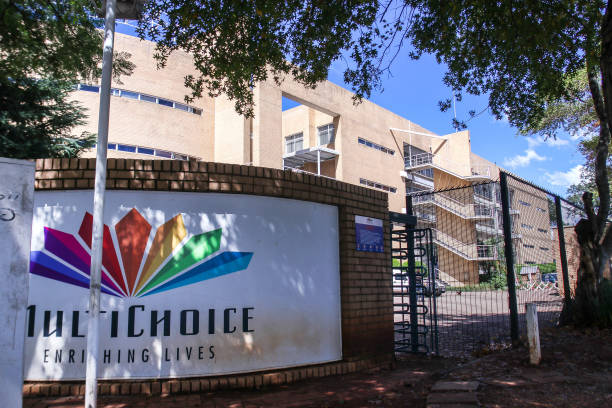
Canal+ is discovering what every South African DStv subscriber has suspected for years: people complain about sport prices, threaten to cancel, and then quietly stay for the football.
What happened? MultiChoice, Africa’s largest pay-TV operator, is shutting down four DStv channels on September 16. M-Net Movies 1, Mzansi Bioskop, Mzansi Music, and KykNet Lekker. Three of those channels are local-content channels. At the same time, the company is launching four new SuperSport channels focused on premium football, African sport, overflow fixtures, and major events.
Explain like I’m new here: This is not just a channel reshuffle. It is a signal about what Canal+ believes is still worth paying for in television. Films, music, and niche entertainment can increasingly be found on streaming platforms, YouTube, or social media. Live sport remains one of the few categories that viewers still want in real time.
The timing is awkward. Canal+ secured approval for its 2025 takeover of MultiChoice partly on the back of commitments to support local content production and small black-owned suppliers. Regulators are still monitoring those undertakings, making the closure of local channels politically more sensitive than the closure of another movie channel would have been.
The pattern is becoming hard to miss.Showmax was folded into DStv Stream in April, BET Africa and MTV Base disappeared in January, and arts and film sponsorships have been trimmed. Viewed together, those decisions suggest Canal+ is steadily reducing investment in entertainment categories that are easier for viewers to replace, while concentrating resources on premium streaming and live sport, the parts of the business that still give DStv the strongest reason for subscribers to keep paying.
Canal+ said it is targeting more than €400 million ($460 million) in annual cost savings by 2030.
Yet, the French media giant is making an entertainment bet elsewhere. In July, Canal+ committed €980 million ($1.1 billion) over five years to support French and European cinema from 2028, including funding for emerging filmmakers, animated films, and independent productions.
Zoom out: The group is not abandoning content investment; it is becoming much more selective about which content it believes can still defend a subscription business.


Getting paid in cedis just got easier for African businesses operating in Ghana.

Fincra now issues dedicated GHS virtual accounts to enable businesses to collect payments. See how Fincra GHS virtual accounts work.
E-mobility
India’s TVS Motor Company launches iQube, its electric two-wheeler, in Kenya

Kenya’s electric vehicle (EV) story has been dominated by boda boda motorcycles for years. TVS is betting the next battle will happen much closer to the supermarket, the office park, and the traffic jam.
TVS Motor Company, the Indian two-wheeler manufacturer, has entered Kenya’s EV market with the iQube electric scooter, launching two variants through local distributor Car & General. The scooters target urban commuters, with a range of 75–115 kilometres and charging from a standard household socket using a portable charger.
Explain like I’m new here: The iQube is not built for Nairobi-to-Nakuru road trips. It is built for the daily commute: home to work, school runs, deliveries, and short urban errands where fuel costs and maintenance bills tend to hurt the most. TVS estimated that a rider could save about KES 47,000 ($360) a year compared with a typical 125cc petrol scooter, depending on mileage, electricity tariffs, and fuel prices.
State of play: Kenya’s adoption curve helps explain why manufacturers are paying attention. According to data from the Energy and Petroleum Regulatory Authority (EPRA), Kenya’s energy regulator, the country had only 194 registered electric vehicles in 2019. By the end of 2025, the number had risen to 6,442, showing a strong adoption pace within six years.
Between the lines: The growth has attracted a wave of Asian manufacturers. The country is rapidly becoming a magnet for Asian EV manufacturers. In June, Yadea, the Chinese electric two-wheeler giant, entered Kenya, and Bingo followed in July with its E2 battery-swapping electric vehicle.
The uptake among both private owners and boda boda riders, many of them connected to gig and delivery platforms such as Bolt, appears to be drawing sustained Chinese interest.
Zoom out: Some manufacturers are likely to compete directly for private customers on price and financing. Others may pursue exclusive partnerships with ride-hailing and delivery platforms, creating a strong distribution moat by controlling the drivers, charging network, and financing channels that determine who actually gets vehicles onto Kenyan roads.
Download PalmPay. Bank smarter.

With PalmPay, you can bank with confidence. Enjoy seamless everyday banking with security features designed to help protect your money. Send money, pay bills, and manage your finances all in one app. Learn more.
Telecoms
Nigeria wants telecom companies to create budgets for cybersecurity

Nigerian telecom operators are about to discover that cybersecurity is no longer the department that gets whatever money is left after towers, fibre, diesel, and marketing.
The Nigerian Communications Commission (NCC), the country’s telecom regulator, has ordered operators to create a dedicated cybersecurity budget category under its updated Cyber Resilience Framework for the Nigerian Communications Sector.
Explain like I’m new here: MTN Nigeria, Airtel Nigeria, Globacom, T2 Mobile, and Internet service providers (ISPs) are being told that cybersecurity cannot be buried inside general information technology (IT) expenses anymore. The NCC wants evidence that companies are actively funding threat detection, monitoring, response, recovery, and subscriber-data protection.
The framework goes well beyond budgeting. Operators must:
- notify both the NCC and the Nigeria Data Protection Commission within four hours of detecting a cyberattack;
- provide updates every four hours until the incident is contained;
- submit a confirmation report within 24 hours;
- file quarterly cyber-incident reports with the NCC’s Computer Security Incident Response Team;
- appoint a Chief Information Security Officer (CISO) with authority to report directly to leadership; and
- retain call logs, user IDs, and traffic data in Nigeria for at least two years.
The telecom regulator also requires boards to establish cybersecurity committees that meet at least twice a year, conduct regular cyber-resilience reviews, and ensure that third-party vendors handling core telecom systems undergo cybersecurity compliance audits.
The funniest part? Nigerian telecom companies now have to teach customers not to share their one-time passwords (OTPs), passwords, and login details with strangers. Across Africa, cybersecurity incidents have remained difficult beasts to tame; this is Nigeria’s attempt to stay ahead of that problem.
Zoom out: With over 157 million Internet subscribers and mobile operators sitting on enormous volumes of personal and financial data, the NCC is treating telecom infrastructure much more like critical national infrastructure that must be protected continuously, documented obsessively, and reported almost in real time when things go wrong.
Naira Life 2026 is here!

The Naira Life Conference 2026 is bringing together Nigeria’s top finance minds, industry leaders, creators, and business strategists for a full-day of specialised sessions and masterclasses designed for ambitious Nigerians who want to make, keep, grow, and pass on real wealth. Happening on August 22 at the Jewel Aeida, Lekki, Lagos. Secure a seat in the room.
Internet
Eutelsat’s OneWeb business, the satellite Internet company, is growing more than 30%

For a long time, talking about low-Earth orbit (LEO) satellites felt like talking about Starlink and everyone else. The “everyone else” part may finally be getting interesting.
Eutelsat, the French satellite operator that absorbed OneWeb in 2023, says revenue from its LEO business is growing more than 30%, enough to offset the steady decline in its traditional video-broadcasting business. The company now expects slight revenue growth in 2027, a notable shift for a satellite industry that has spent years watching streaming eat into television distribution.
Explain like I’m new here: Traditional satellite TV uses geostationary satellites parked about 36,000km above Earth. They are excellent for broadcasting the same signal to millions of homes, but they are relatively slow for Internet connectivity. LEO satellites orbit much closer to Earth, typically a few hundred to a few thousand kilometres up, which means lower latency and faster broadband connections.
Why this matters for Africa: Starlink has dominated the conversation because it has moved aggressively into African markets, including Nigeria, Kenya, Zambia, Malawi, and several others. Eutelsat’s OneWeb constellation is currently the only other operational global LEO network—with partnerships in several Southern African markets—giving governments, telecom operators, and enterprise customers a rare alternative to relying on a single provider.
Between the lines: Eutelsat generated €1.24 billion ($1.35 billion) in revenue for the year ended June, with LEO services contributing about a quarter of group revenue. Adjusted core earnings slipped 3.1% to €632.4 million ($689 million) as the company spent more to build out the business, while its net loss narrowed sharply after much lower impairments than the previous year.
Zoom out: The real story is not whether Eutelsat is beating Starlink; it is whether the global satellite Internet market is becoming a two-horse race instead of a monopoly-shaped one. For African countries trying to expand rural broadband, negotiate better wholesale prices, or avoid depending entirely on a single foreign operator, that distinction could become surprisingly important.
Moonshot is back!

Moonshot 2026 is coming! Join us at the National Theatre, Lagos on October 28 & 29 for two days of tech and innovation. Grab your early bird tickets now and get 15% off.
CRYPTO TRACKER
The World Wide Web3
Source:

|
Coin Name |
Current Value |
Day |
Month |
|---|---|---|---|
 Bitcoin Bitcoin |
$62,749 |
– 1.06% |
+ 0.41% |
| Ether |
$1,855 |
– 1.09% |
+ 5.62% |
| Biconomy |
$0.01471 |
+ 23.91% |
– 4.96% |
| Solana |
$72.80 |
– 0.91% |
– 12.44% |
* Data as of 06.40 AM WAT, August 10, 2026.
Opportunities
- Creative Economy Accelerator Programme. The programme is open to African startups building in music, film and media, design, and creative tech. Selected startups will receive between $20,000 and $50,000 in funding and support. Apply here by August 28.

Written by: Emmanuel Nwosu
Edited by: Emmanuel Nwosu
Want more of TechCabal?
Sign up for our insightful newsletters on the business and economy of tech in Africa.
- The Next Wave: futuristic analysis of the business of tech in Africa.
- Francophone Weekly by TechCabal: insider insights and analysis of Francophone’s tech ecosystem
P:S If you’re often missing TC Daily in your inbox, check your Promotions folder and move any edition of TC Daily from “Promotions” to your “Main” or “Primary” folder and TC Daily will always come to you.


Write your views on this post and share it. ConversionConversion EmoticonEmoticon