

Ahead of a June 30 deadline for undocumented migrants to leave South Africa, telecom giant MTN said it is throwing its weight behind crisis-resolution efforts.
The Johannesburg-headquartered telecom giant told TechCabal on Wednesday that it was closely monitoring developments across South Africa and has called for calm.
“Across our markets, MTN is monitoring developments related to ongoing migration challenges. As ever, the safety and security of people and property is paramount,” it noted in an emailed response.
Tensions have risen since March and March, an anti-immigration movement and activist group, took the law into their hands and ordered undocumented migrants to leave South Africa by June 30.
The growing unrest is becoming a test of how South African-headquartered companies like MTN, with deep African footprints, navigate rising diplomatic tensions, public anger, and growing scrutiny from other African nations where they generate some of their revenues.
For MTN, whose substantial earnings increasingly come from Nigeria and Ghana, the crisis exposes a difficult contradiction. How does a company built on pan-African integration respond when its home country is accused of hostility toward fellow Africans?
That concern is now being voiced by South Africa’s own business establishment. In a joint statement issued on June 5, Business Unity South Africa (BUSA) and Business Leadership South Africa (BLSA) warned that hostility toward foreign nationals directly harms South Africa’s economic interests. BUSA and BLSA are South Africa’s two influential business advocacy organisations, representing many of the country’s largest companies and business leaders.
“We strongly call for swift action to ensure the return to the rule of law. We also firmly believe that South Africa requires strong, steady leadership from the government to guide immigration, labour enforcement, and social cohesion. Clear and calm governance will reassure communities and stakeholders that concerns are being addressed effectively,” the response to TechCabal read in part.
The organisations noted that South African companies operate across the continent while firms from elsewhere in Africa invest in and create jobs in South Africa, making continental integration “the driver of our collective success.”They also called for “calm and co-created African solutions” grounded in the rule of law and human rights.
The human toll of the crisis is most visible at Durban’s Sherwood Park, where an estimated 10,000 African migrants, mostly Malawians, have gathered in makeshift camps after fleeing communities where they feared attacks linked to anti-immigrant protests. Many abandoned homes, jobs and businesses because they no longer felt safe.
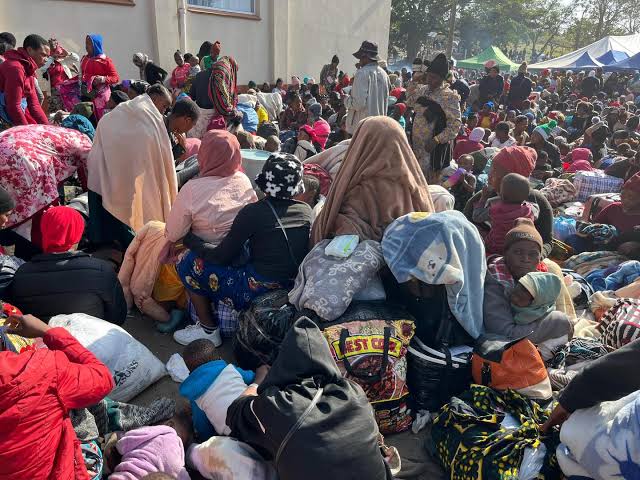
The camp has become a symbol of the growing desperation among migrants as the June 30 deadline approaches, with families sleeping outdoors while waiting for repatriation assistance.
Zimbabwe has announced that it has already assisted 696 citizens to return home since the start of June, while Malawi has begun transporting thousands of its nationals back across the border. Nigeria and Ghana have also lifted their citizens from South Africa.
A Johannesburg-based Malawian delivery rider for e-commerce giant Takealot, who asked not to be named because of the sensitivity of the matter, expressed deep concern for his fellow countrymen sleeping in tents at Sherwood during the bitterly cold South African winter.
“Returning home is no longer an economic decision but a safety measure driven by fears for their lives. What makes it even more scary is that the March and March group now targets those with valid permits,” the source told TechCabal on Monday.
The pressure on South Africa is already visible. On June 11, protesters from the “South Africa Must Go” movement marched to MTN Ghana’s headquarters in Accra, accusing South Africa of mistreating African migrants. The demonstrations came amid growing outrage in Ghana and Nigeria over reports of harassment, displacement, and attacks on foreign nationals in South Africa.
Against a backdrop of rising regional tensions, MTN said it has aligned with BUSA and BLSA’s call for restraint and adherence to the rule of law.
“As a proudly African organisation that employs 15,000 people, representing 74 nationalities and ethnicities, MTN believes that meaningful dialogue is critical in shaping a more inclusive, connected and prosperous continent,” the company noted in its response to TechCabal.
It also pledged to support the Kgalema Motlanthe Foundation’s Winter Series Dialogues on migration, arguing that “constructive and inclusive dialogue” is needed to address complex migration challenges across Africa.
Meanwhile, MTN Group President and chief executive officer, Ralph Mupita, publicly framed the issue as a threat to Africa’s integration agenda.
“The future of Africa depends on greater social solidarity, increasing economic integration and the observance of the rule of law. MTN as a pan African business, is supportive of constructive and inclusive dialogue on these complex issues,” Mupita wrote in a LinkedIn post on June 14.
from TechCabal https://ift.tt/sBwLkgi
via IFTTT

I am the CEO of 9JAGISTLAND.My name is Adedeji Timothy and my co-owner is Oyekola Damilare.This blog is born out of our passion to educating to people in all aspect of internet life.We are enthusiastic about writing posts and articles online.
Write your views on this post and share it. ConversionConversion EmoticonEmoticon