

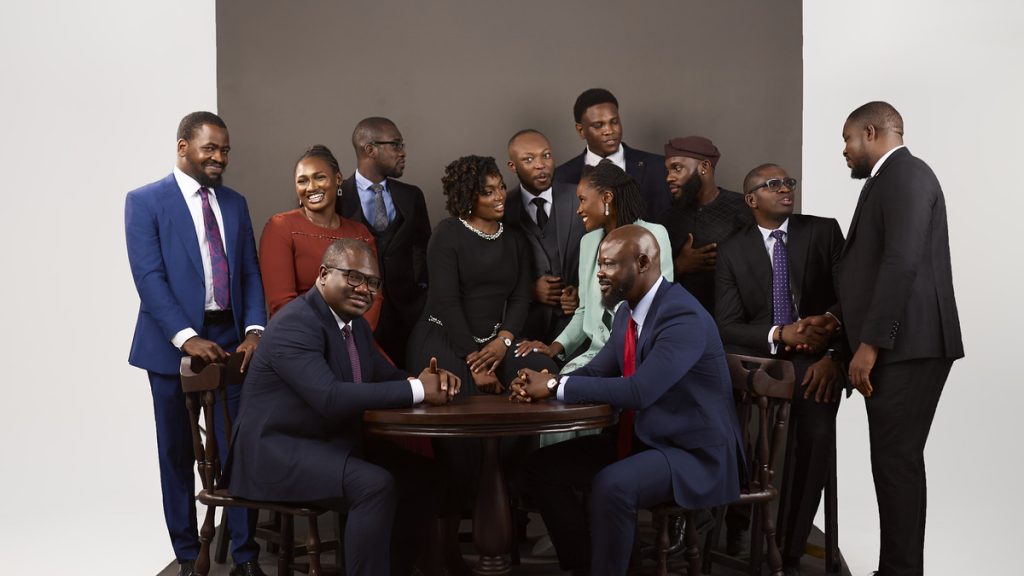
One afternoon in February 2026, I went to Ikeja GRA, a highbrow neighbourhood in Lagos, to talk to a new crop of executives at Cowrywise, the wealth management fintech that manages money for over two million Nigerians.
Four weeks earlier, at a January retreat held at a business club in Victoria Island, a highbrow area on the southern side of Lagos, Cowrywise had promoted 11 people to the title of associate vice president (AVP), the type of move that earns the rare tag of ‘unprecedented’ in Nigeria’s tech ecosystem.
For a company of fewer than 80 people, it meant one in seven employees ended that day as a senior executive.
My visit to Cowrywise’s office was to figure out whether this was a genuine restructuring of a growing financial institution or inflated titles meant to appease employees. What I found was more complex than either explanation.
The Scale of Systemic Risk
When a fintech has 10 users, risk is negligible. When it has 2 million, the complexity is systemic. Drag the slider to see why an 80-person company requires 11 Vice Presidents to survive.
I was not alone in finding the promotions unusual. Abiola Sowemimo, a fintech human resources executive renowned for helping build Paystack's HR team and practices, told me her first reaction was caution rather than judgment.
"This is unusual. Not that it is automatically wrong, just very unusual," she said. In a company of about 70 people, promoting 11 to AVP at once "would naturally raise questions."
"It is a leadership promotion, so the concern becomes whether this is a real promotion," she added.
But Sowemimo was equally clear that the nature of Cowrywise's business changes the equation. “It looks like an intentional organisational move rather than business as usual,” she said.
Part of what changes the equation is that Cowrywise is regulated by Nigeria's Securities and Exchange Commission (SEC).
A company licensed to manage other people's money faces scrutiny that an ordinary startup does not, because regulators want decision-making distributed among experienced people across important business units like risk, finance, and compliance.
What does Cowrywise do?
To understand the promotions, you first have to understand Cowrywise’s business model and how it makes money.
Founded in 2016 by Razaq Ahmed and Edward Popoola, Cowrywise is a wealth-management company. What it does, in the words of Omowonuola Tunde-Bello, the AVP of investment management, is "invest on behalf of our clients and charge management fees."
Customers put their money in wallets via transfer or card payments; Cowrywise's portfolio team allocates it across savings products, mutual funds, fixed-income products like treasury bills and, more recently, equities on the Nigerian Exchange Group, and the company takes a management fee on those assets.
It is the same way a traditional asset-management firm like Chapel Hill Denham makes its money.
Today, to fund a ₦1,000 ($0.70) investment plan, a Cowrywise user will transfer ₦1,015 ($0.70), inclusive of processing fees or set up a direct debit. They can pick from Naira portfolios that have returned between 4.33% and 51.56% so far this year.
When I invested ₦1,000 ($0.73) in the highest-returning option in March, the 29.36% equity portfolio that was significantly weighted towards stocks, only ₦989 ($0.72) was reflected in my balance, indicating an additional ₦11 deduction from the invested amount.
By May, my initial ₦1,000 had grown to ₦1,156, a 16.9% gain in two months. It lost ₦20 in March, gained ₦159 in April, and has added ₦17.34 so far in May.
Cowrywise also partners with older asset management firms, such as Meristem Wealth Management, Afrinvest, ARM Investment Managers, and United Capital Asset Management, serving as a distribution layer and tech infrastructure for their funds.
These relationships help the company’s partners bring regulated products to its customers, while Cowrywise provides the technology and distribution that get those products in front of retail customers through its app. A win-win of sorts for both parties. Cowrywise declined to share how it shares fees with its partners.
How much does it cost to grow your wealth?
Cowrywise sustains its operations by taking a small management fee on your investments. Play with the numbers below to see how fees and returns balance out in real-time.
*Note: This is a simplified calculation for educational purposes, based on a flat 1.5% management fee deduction model.
The startup’s digital-first model traces directly to Ahmed’s time as an investment analyst at firms like Vetiva and Meristem, where he observed that traditional wealth managers catered almost exclusively to high-net-worth clients, leaving the vast majority of Nigerians without access to investment products. In 2025, the director-general of the Securities and Exchange Commission (SEC), Dr Emomotimi Agama, said that less than 4% of Nigerians invest in the capital market.
That digital path has also allowed Cowrywise to create products like Halal savings for Muslims that don't accrue interest; Stash (a digital wallet for receiving and sending money); Circles (group savings); Triggers (a feature that automatically saves or invests when preset conditions are met, like when your football club scores a goal); and Money Badges (gamified milestones celebrating savings achievements).
It also runs Sprout, a corporate treasury management tool leveraging technology and asset management solutions to help businesses invest idle cash.
Cowrywise's business has also expanded beyond retail distribution. Over the past year, the company has built a proprietary investment capability, deploying capital across public markets and other financial assets with a focus on long-term, risk-adjusted returns and begun portfolio construction for select high-net-worth clients.
Abdulrauf (Rufy) Bello, the AVP for investment management, who joined a year ago specifically to lead that capability, now manages the proprietary book alongside contributing to the firm's broader investment research and financial education output.
This shift is one of the latest in the company’s efforts to move from a savings-focused platform to a full digital wealth platform, where users actively invest across diversified financial assets.
Since its founding, Cowrywise has grown from a few thousand customers to over two million, a figure several employees mentioned to me with the pride of those who built the business from the ground up.
That growth inevitably produces complexity. When a company has ten customers, the risk is negligible, but when it has a million, the risk is systemic and gigantic.
Such a company needs people who think about liquidity ratios, credit exposure and what happens when 10,000 customers all hit the withdrawal button on the same afternoon. It needs someone whose job is managing risk. It needs the SEC to trust that those people exist and that they can do a good job.
The Reality of Equity Returns
High-return portfolios don't move in a straight line. Use the slider or type an amount to see how the market fluctuations from March to May 2026 affect your money in real-time.
*Calculations use exact figures from the article: -2.0% in March, +15.9% in April, and +1.73% in May.
Eleven seats
At the January retreat, as Obi Uchenna David, the engineering AVP, told me, the serious business portion of the day had ended, lunch had been eaten, and everyone was expecting the fun part with team-bonding games and music.
Instead, 11 seats were set at the front of the room. Names were called. Depending on who you ask, the AVPs were "pleasantly surprised,” “shocked, and "not expecting it to come this soon."
By David’s account, the promotions are an attempt at formalisation. The single most repeated phrase in my interviews was some version of "I've been doing this already."
"You have been dating your high school love for the last 10 years, and now you're getting married. No one should be surprised,” said David, who leads product engineering, security, and AI research.
David has been at Cowrywise for eight years, joining in November 2018, and has worked on almost every product the company has ever owned.
He started as a mobile and backend developer, migrated into cybersecurity, built the company's in-house fraud-detection system, and led the team that created one of Cowrywise's most recognisable products: the savings trigger that automatically sets aside money when your football team scores a goal. He is a Manchester City fan, so the damage in recent years has been significant.
He also built the company's most commercially significant product almost by accident. The Cowrywise Investment Portfolio, its equities product, was born from a brief exchange: Ahmed, the CEO, walked in with an idea, and they discussed it for 15 minutes. David said he could build it, and it was live within hours.
"It's one of the highest-grossing products right now," he said, pausing. "Which is now a problem because Razaq thinks all products can be like that." The process today, David was careful to note, would involve product managers, technical specifications, and review cycles—signs, he added, that the company has matured.
But his words revealed that preferring speed and being uncomfortable with bureaucracy are not bugs in Cowrywise's culture but features that shaped it. I wondered whether the AVP structure is an attempt to preserve that instinct without letting it run unchecked.
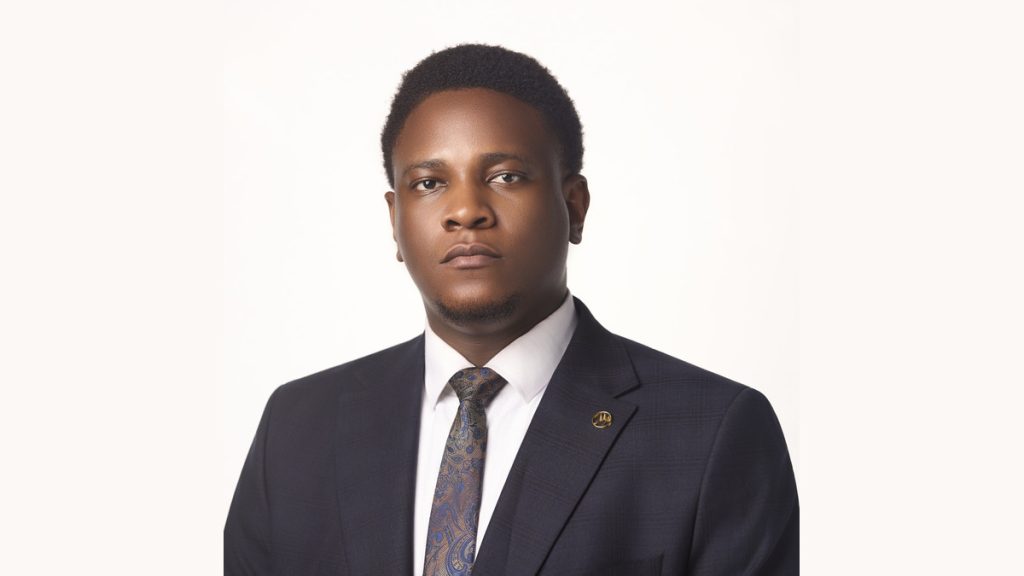
Feyisayo Sonubi, the design AVP, who has been at Cowrywise even longer than David, helped put things in perspective. He joined in 2017 as a University of Lagos student, initially as a front-end engineer. When Cowrywise had no designer, his enthusiasm for the discipline pushed him to raise his hand at a meeting and volunteer for the role.
"The rest is history," Sonubi said. You could tell he had told the origin story of Cowrywise’s design department and his role as the first designer many times.
Nearly a decade later, Sonubi leads a team of four. He is responsible for every visual element of the Cowrywise brand: the logo, the product interfaces, and the colours. His fingerprints are all over the app that millions of people open. When I asked him how the promotion felt, he was honest: he hadn't expected the title this early in his career or life.
"When I look at people who have the same title at bigger companies, they're always like these old people, 50-something years old," he said. "It's not someone in his twenties or thirties, you know, an associate vice president."
At larger institutions where the AVP title (a rank borrowed from American banking) carries weight, an AVP is usually well into mid-career. At Cowrywise, a company younger than my first iPhone, it is being handed to people in their late twenties and early thirties.
In more mature startup ecosystems, a sudden batch of executive promotions often signals an intention to raise significant capital, prepare for an acquisition, or list publicly, but Yunusa, the finance AVP, shut that notion down. "I'm 100% sure that there's no conversation about it," he said, adding that he doesn't think businesses are built properly from a finance standpoint by always thinking about fundraising.
Still, Cowrywise has raised roughly $3.69 million across five rounds, and against that floor, it now looks, more than at any prior point, like a credible candidate for a large growth round, particularly given that the company says it is profitable, a magnet for investors. A fintech managing money for two million Nigerians under SEC regulation, with a risk framework, a formal governance structure, and now eleven AVPs, has made itself considerably more legible to institutional capital, whether or not that was the intention.
The Founder-Dependency Blast Radius
In Nigerian fintech, a single decision-maker can be a fatal bottleneck. Toggle the company structure below, then tap the CEO to simulate what happens when the founder is unavailable.
Cowrywise is decentralising
Almost everyone I spoke to described the same problem in different words: Razaq Ahmed and Edward Popoola, Cowrywise cannot be everywhere. The CEO's calendar, one AVP told me, is booked for weeks without breaks. He attends events, meets regulators, and handles board conversations, and was (until recently) still somehow involved in product decisions and hiring calls.
The company needed, as David put it, "people that can also drive the vision of the company" so that Cowrywise would not be "dependent on the CEO or just the founders to survive."
Time has taught me that this is not a trivial concern. In Nigerian fintech, founder dependency is an existential risk. When a CEO is the sole authority on investment allocations or product launches, the business has a single point of failure.
The starkest illustration of this risk is Patricia, the crypto company that lost $2 million to a hack in 2023. Sources close to the company shared that CEO Hanu Fejiro Agbodje was the sole person authorised to move money and that the company lacked a board despite substantial revenue.
When the hack hit, five C-level executives departed. Former employees said the hack alone did not cause the company’s problem, but mismanagement, with no board or leadership bench to absorb the pressure.
Cowrywise, regulated by the SEC, cannot operate that way. The regulator has a direct interest in whether decision-making is concentrated in one person or distributed across experienced professionals, and that scrutiny certainly factored into the promotions.
Ebenezer Akintomide, AVP for people and culture, made the regulator's likely view explicit. "If I were the regulator," he said, "I would look into the profiles of those people, and I would be proud."
"Professionals at the highest levels in their field, with the right training, with the right knowledge, with very solid experience. People from the Big Four, people from global companies," Akintomide, the AVP for people and culture, said.
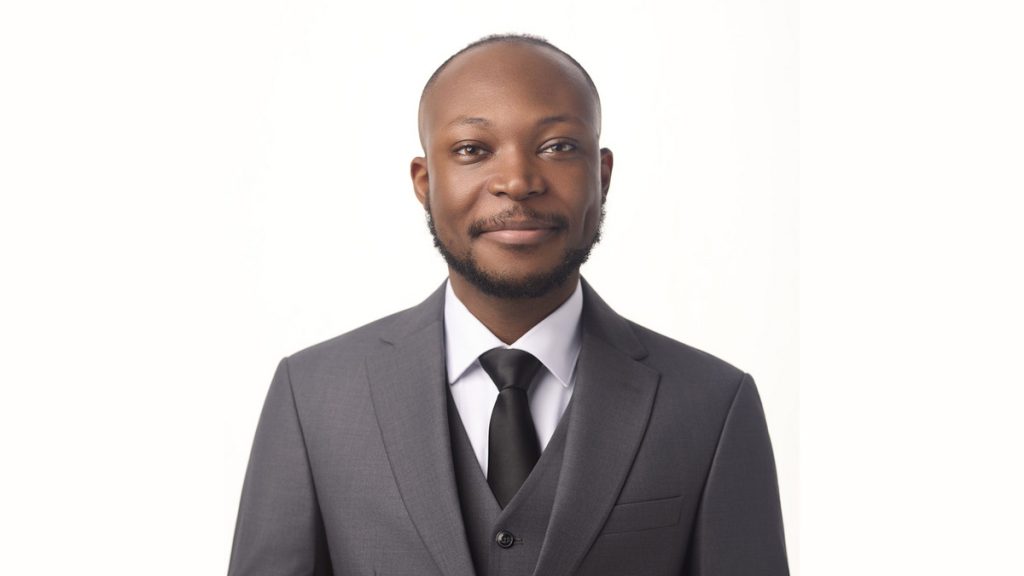
Ibrahim Akintoye, the AVP for risk management who set up Cowrywise's risk management function, had spent six years at KPMG before leaving as an assistant manager. Tunde-Bello, who manages the investment portfolio, is a Chartered Financial Analyst (CFA) charterholder, a global certification for finance professionals, and previously worked at Leadway Pensions and Chapel Hill Denham as an investment manager and portfolio manager, respectively.
Einstein Yunusa, the finance AVP, also came from KPMG, having spent six years and left as a manager. At these other companies, they would be mid-career professionals, but at Cowrywise, they own their part of the business with what seems like the authority to match.
How does Cowrywise define ownership?
What does "ownership" actually mean for Cowrywise? This was the question I kept asking the AVPs, and their answers were instructive.
Yunusa, who leads finance, told me his core responsibility is ensuring the company can "continue to exist into the future" by managing its cash reserve, eliminating any leakages in the company’s finances, and building long-term financial plans. Before the promotion, he said, he would sometimes do things that were helpful but technically outside his job description. Now, those things are formally his.
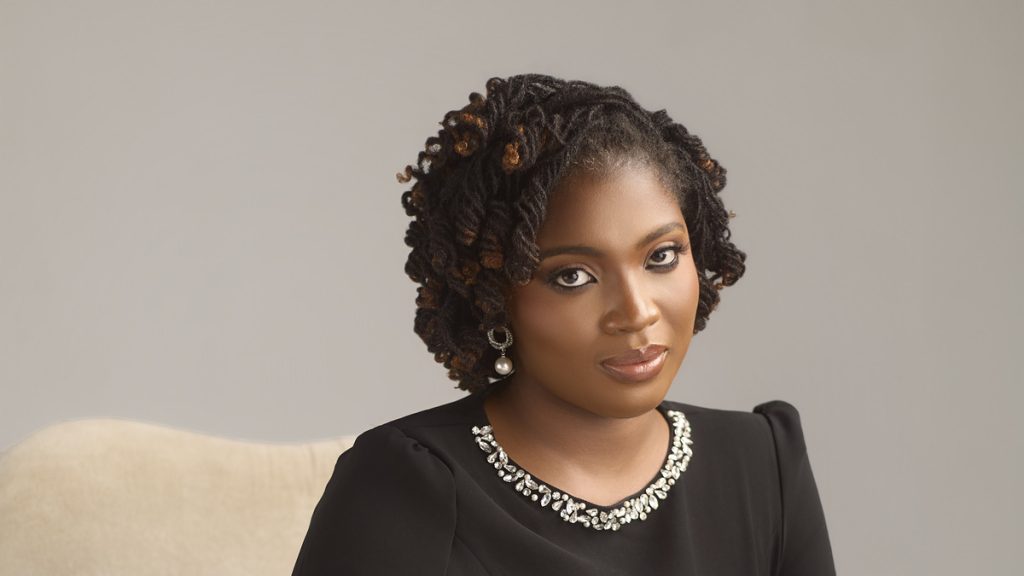
Tunde-Bello, the portfolio manager, described her new role as ensuring that client funds are safe, that investments align with the company’s objectives, that Cowrywise remains profitable, and that regulatory reporting is delivered on time. She has two to three direct reports and has been at the company for only 7 months—the shortest tenure among the AVPs.
"I didn't expect it to come this soon," she said about her promotion, which can be understood given her traditional background and the longer promotion cycles that exist in older firms.
Akintoye, the AVP for risk management, who arrived about a year ago, told me a story that captures the texture of what "owning risk" looks like at a company that never had a formal risk function. When he joined from KPMG in 2024, he discovered that most Cowrywise employees had never interacted with risk management in a structured manner.
There was, he said, a general fear at the company that his department would "drag them back." To assuage those fears, he did something unusual: he created a Google Form, titled after a trending meme (We listen, we don’t judge), and filled it with questions posed as a no-judgement risk-management quiz.
Akintoye used the form to gauge his colleagues’ baseline understanding of risk before running a training session, appointing risk owners across every department, building a risk register with key risk indicators, and establishing monthly reporting to the board.
"The beautiful thing,” he said, "is that risk management is best when it is being done before major decisions are being taken." Before the AVP title, he was already doing all of this. The title just meant that when he says something needs to stop, it carries formal weight.
For Sowemimo, the fintech HR expert, fixating on the number misses the point. "The key question is not why it is 11 people. Even if it were 20 people, the question is, what do these people own now that they are AVPs? What has changed in the operating model of the business?"
A mass promotion only means something, she said, if it comes with a real shift in how the company runs. "It cannot be business as usual with 11 new people in leadership positions. There has to be an intentional shift, and the question is whether that shift is actually happening."
This is the question I kept putting to the AVPs.
The case for absurdity is easy to make when there are eleven vice presidents in a seventy-person company.
In corporate Nigeria, "vice president" conjures images of corner offices at Access Bank, not open-plan desks in a converted duplex. Eleven chiefs are a lot for a small tribe.
Several of the AVPs have teams of two to four people; Tunde-Bello, the investment management AVP, has two or three direct reports; Akintoye, the risk AVP, has none, but he said he is hiring. Sonubi, the design AVP, presides over a team of four.
The case for sense requires understanding what Cowrywise is trying to build as it evolves from a small savings fintech to a multi-product financial institution where the word "governance" has to be a daily practice.
This is the logic behind the promotions. According to recent history in Africa’s startup ecosystem, companies that fail almost always fail because of bad governance. By distributing authority across eleven people, each with a defined area of ownership, Cowrywise is building decentralisation into a business where it matters.
If the CEO is unavailable, investment decisions still get made within the established framework. "Whether Razaq is here or not, that framework is still going to work on all investments," Tunde-Bello told me.
The framework approach also extends to Rufy Bello, who now handles portfolio allocation and market-positioning decisions by himself. All he has to do is execute within an investment mandate already agreed with the founders and inform them “at a strategic level”.
Because individual allocation calls no longer need the founders' sign-off, approvals that could stall at their desks now move independently, which sounds mundane but is what decentralisation looks like at a regulated financial institution. Now, if a regulator asks who is responsible for risk, there is a name, a face, a CFA charter, and a Big-Four pedigree.
What struck me most during that afternoon in Cowrywise’s office was not the promotions themselves but the people. The AVPs were all young, and none came across as holders of such a serious title, but the company’s performance shows that. More than half of Cowrywise's engineers hold CFA certifications.
The logic, as Akintomide, the AVP for people and culture, explained it, is that if you are building a stock-trading product, the people writing the code should understand what a liquidity ratio is. The result, by the company's own account, is its stock-trading platform, a product that went from concept to launch in hours and now accounts for a significant share of assets under management.
The Architecture of Collapse
A founder is a single point of failure. Drop a market shock on the company and see if the structure holds.
The cathedral
There is a phrase that Tunde-Bello used, half-jokingly, to describe the company's ethos: "We call this place a cathedral. Building the cathedral, that's our goal."
The cathedral metaphor is a little grandiose, but it captures something about what is happening at Cowrywise’s duplex in Ikeja GRA. Cathedrals take generations. They require stonemasons who may never see the spire completed. In Barcelona, the Sagrada Família, one of the oldest construction projects ever, has been under construction since 1882 and is still not completed.
Cathedrals demand a kind of faith in the institution that outlasts the individual. In Nigerian tech, where the median startup lifespan is roughly that of a goldfish’s memory, building a cathedral is either an act of profound ambition or of profound delusion.
Cowrywise is betting on ambition. The eleven vice presidents are not, in the end, about titles but about the company's wager that it can transition from a founder-led startup into a multi-generational and multi-product financial institution and it can move from the phase where Ahmed walks in with an idea and it's live by lunch to the phase where frameworks, risk registers, and distributed authority keep the business running whether the founders are in the room or not.
If this works will depend on factors that titles alone cannot guarantee: whether the products keep performing, whether regulators remain satisfied, and whether two million customers continue to trust a duplex full of twenty-somethings and thirty-somethings with their money. But the structural bet is clear. Cowrywise has shifted from the path most Nigerian fintechs take by growing fast, depending solely on the founder, and hoping for the best.
Cowrywise’s office is still a duplex. But inside, eleven people now own a piece of what comes next. In an ecosystem that needs more examples of corporate governance is, at a minimum, worth talking about.
from TechCabal https://ift.tt/AMjGZ8z
via IFTTT

I am the CEO of 9JAGISTLAND.My name is Adedeji Timothy and my co-owner is Oyekola Damilare.This blog is born out of our passion to educating to people in all aspect of internet life.We are enthusiastic about writing posts and articles online.
Write your views on this post and share it. ConversionConversion EmoticonEmoticon