



Happy Easter Monday. 
If TC Daily keeps landing in your Spam folder, please move us to your Primary or Main inbox. We deliver fresh editions every day at 7 AM WAT, and we don’t want you to miss a thing.
Let’s dive in.

Telecoms
MTN separates Ghana mobile money business

MTN Group, Africa’s largest telecoms operator, has completed the separation of its mobile money business in Ghana, carving out its most valuable growth engine into a standalone entity that can raise capital and be valued on its own terms.
The restructuring consolidates the mobile money arm into a new entity, MobileMoney Fintech Ltd, jointly owned by MTN Dutch Holdings B.V. and a local trust representing minority investors in Ghana. Operationally, little changes. Strategically, it marks a shift in how MTN wants investors to see its business.
For years, the company’s fintech arm has been masked by the slower growth profile of voice and data. Mobile money, by contrast, is expanding rapidly, with higher margins and deeper customer engagement across payments, lending, and financial services.
Separating the unit begins to draw a clearer line between those businesses.
The timing reflects how much the market has matured. Mobile money in sub-Saharan Africa is now a $1.4 trillion transaction ecosystem, no longer an emerging experiment but a core layer of the financial system.
Ghana is the test case. It is one of MTN’s most mature markets, making it the easiest place to prove that a standalone fintech unit can attract external capital.
Success there would strengthen the case for similar separations already underway in Uganda.
The broader shift is already visible. MTN is positioning fintech not as a supporting product, but as the centerpiece of its long-term growth story.


20+ Markets. One API.
Fincra connects your business to Africa’s payment rails without building market by market. For collection, payout, FX, and settlement through a single integration. See what this means for your business.
Mobile Money
3 in 4 Kenyans now use mobile money
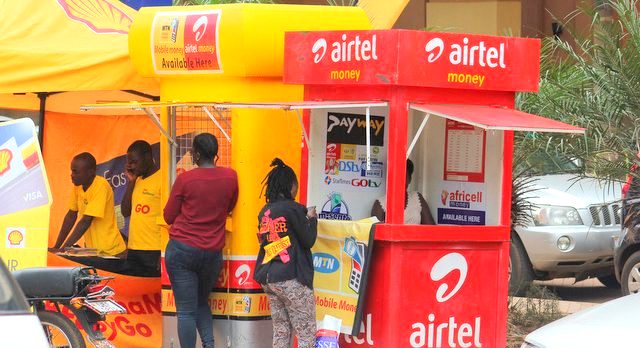
Kenya’s mobile money market is booming. In 2025, the country added 9 million mobile subscriptions, pushing the total to 51.36 million. This means that 3 in every 4 Kenyans now use mobile money.
The country’s mobile money penetration now stands at 98%; at nearly full capacity, the competition is no longer to get more Kenyans to use mobile money. The next fight between operators will be the first to provide vertical integration that locks in customers.
The pricing war: Airtel Money, the country’s second-largest mobile money operator (MMO), has spent the last few years pulling a classic challenger move of lower fees, free transfers, and wider agent distribution to win over users from its largest competitor, M-PESA.
That strategy has worked; M-PESA’s dominant market share has since slipped from 95% in 2023 to below 90% in 2025, while Airtel Money has climbed into double digits.
But the room to compete on price is shrinking. Regulators are stepping in to force fees down across the industry, with plans to cut average transaction costs from about KES 23 ($0.18) to KES 10 ($0.077). If these prices eventually reduce, MMOs will be forced to price reasonably; it might also dull the low-price edge that operators, such as Airtel Money, previously relied on.
Safaricom, on its part, is betting that the next phase of competition will not be won on price, but on depth. Instead of matching Airtel fee for fees, it is building a closed-loop ecosystem by expanding what M-PESA can do by layering in savings, credit, investment products, and merchant tools to make the wallet harder to leave.
In a market where almost every Kenyan has been onboarded, the real winner will be the operator that users rely on the most, and that’s what Safaricom is trying to achieve.
Payments
Kenswitch and Visa partner to power Kenya’s payments system
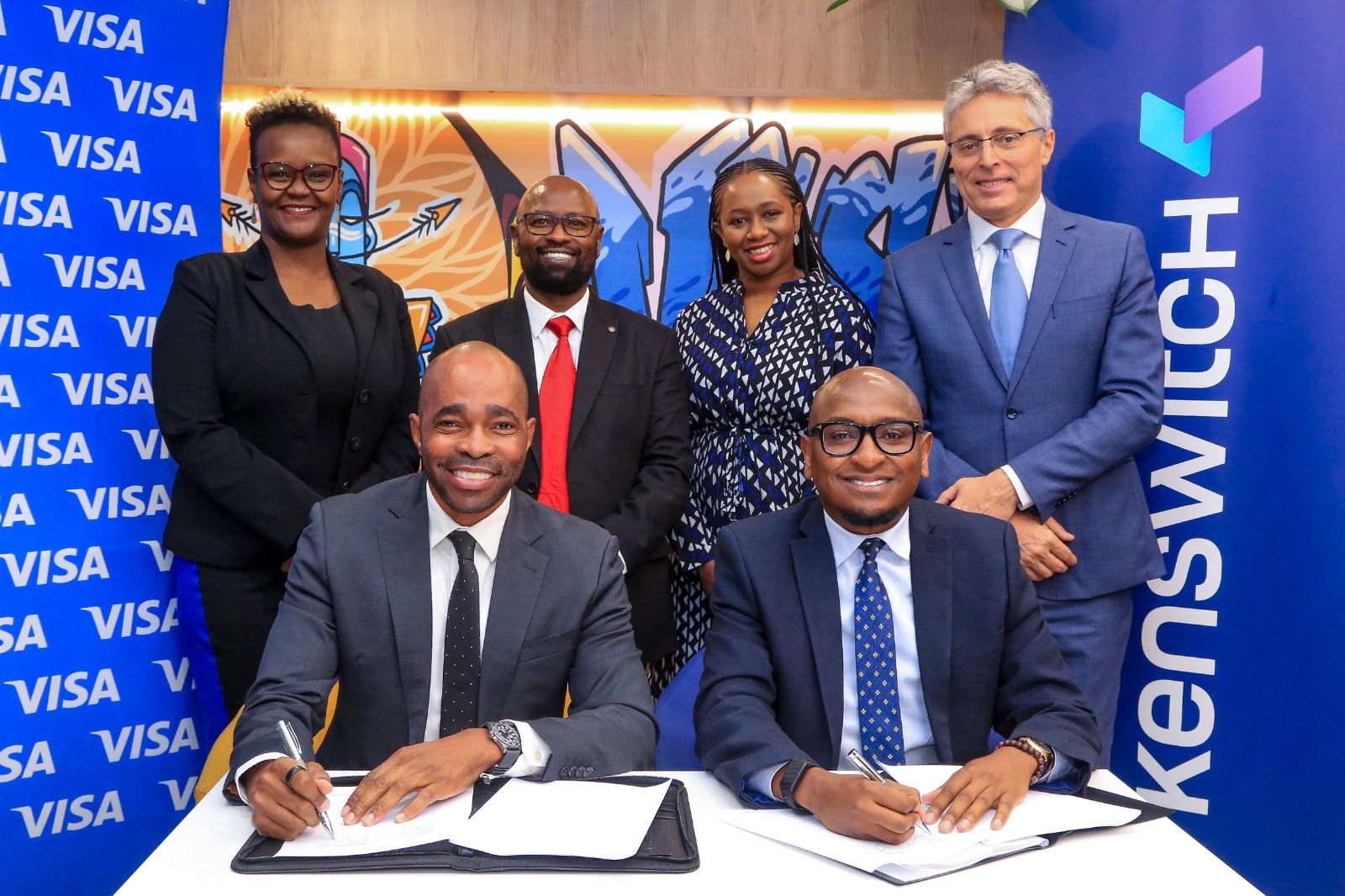
Kenswitch, a Kenyan payments infrastructure provider, has partnered with Visa, the global payments infrastructure company, to build out the technology and services that could underpin Kenya’s next phase of digital payments.
Kenswitch, which already connects over 30 financial institutions, is layering on the global rails of Visa to expand its case of becoming Kenya’s next payments switch.
What both companies are planning to build: Kenya is in the middle of designing a fast payment system (FPS) and a national switch that would allow money to move seamlessly across banks and mobile wallets in real time.
This national switch acts as an invisible layer that routes transactions between players. By plugging Visa into its infrastructure, Kenswitch is aiming to upgrade how transactions are processed and settled, while also enabling new products for financial institutions.
The competition is heating up: Everyone wants a stake in the rails. Kenyan banks are pushing Pesalink, a switch operated by the Kenya Bankers Association (KBA) through its fintech arm, Integrated Payment Services Limited (IPSL), as the backbone of the new system. Across the continent, similar backbone operators, such as the Nigeria Inter-Bank Settlement System (NIBSS), the country’s payment switch, partnered with local firm Ceva in 2025.
Kenswitch is in an arms race to anchor Kenya’s payments ecosystem, a high-stakes contest involving a new FPS built from scratch and Pesalink, which recently joined the Pan-African Payment and Settlement System (PAPSS) to fuel its cross-border trade ambitions.
Startups
South African EV startup Charge plans tokenised public raise in June
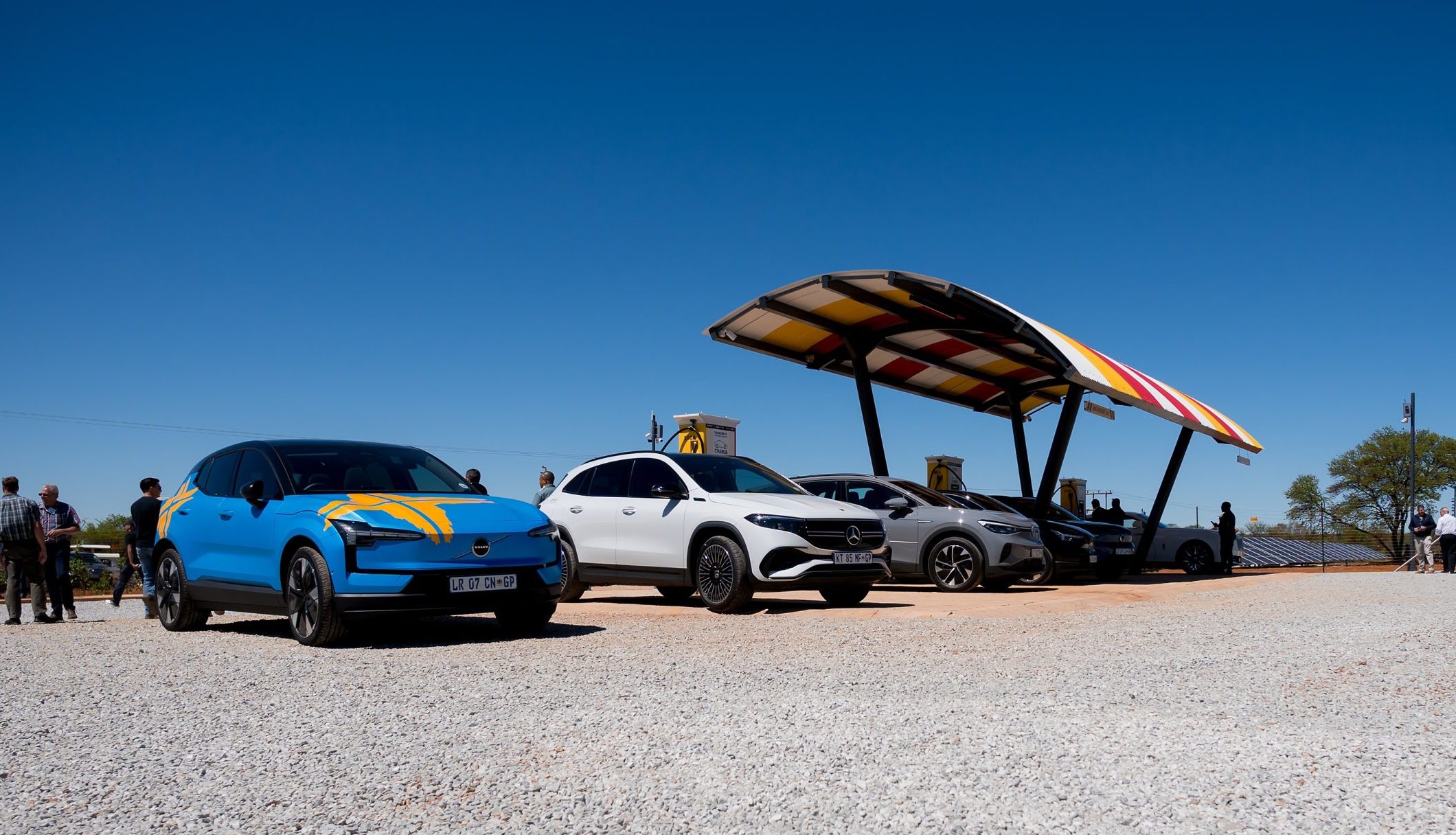
Off-grid electric vehicle (EV) charging startup Charge is skipping South Africa’s stock exchange and heading straight to the blockchain.
The company plans a tokenised public raise on Mesh, a decentralised exchange (DEX) that allows investors to buy fractional stakes in real-world assets. It is already raising privately on the platform ahead of a broader public offering expected in June, open to retail investors shut out of traditional fundraising rounds.
Charge’s pitch: Building a nationwide EV charging network is capital-intensive and slow. Charge wants to deploy stations every 150 kilometers along highways, but founder Joubert Roux says institutional capital in South Africa moves cautiously, even with one of the world’s largest pension pools. Tokenisation offers speed, access, and fewer intermediaries to bypass.
The deeper story is about what happens when public markets stop working for early-stage infrastructure bets. Listing on the Johannesburg Stock Exchange (JSE) can take several weeks to months. For a company racing to build ahead of EV adoption, that lag matters.
The economics hinge on a market that barely exists today. Charge says each station needs about seven vehicles a day to break even. That sounds manageable. But South Africa’s EV base remains small—with EV sales declining 13.4% in 2025—and concentrated, with limited highway usage. Demand will take time to catch up with supply.
That is Charge’s bet. Build first and hope utilisation follows. Tokenisation changes who carries that risk. Instead of institutions, retail investors are funding infrastructure that may take years to generate steady returns.
If EV adoption accelerates, it works. If not, early investors are left waiting.
CRYPTO TRACKER
The World Wide Web3
Source:

|
Coin Name |
Current Value |
Day |
Month |
|---|---|---|---|
 Bitcoin Bitcoin |
$69,122 |
+ 3.96% |
+ 1.80% |
| Ether |
$2,131 |
+ 3.83% |
+ 7.84% |
| XRP |
$1.33 |
+ 2.44% |
– 2.00% |
| Solana |
$781.92 |
+ 2.80% |
– 2.85% |
* Data as of 06.40 AM WAT, April 5, 2026.
Job Openings
- Big Cabal Media — Senior Motion Designer, YouTube Growth Strategist, Quality Assurance Engineer, Editor-in-Chief (TechCabal) — Lagos, Nigeria
- Big Cabal Media — Senior Reporters, South Africa — Remote (South Africa)
- Fincra — Country Manager, Kenya — Remote (Kenya)
- Fincra — Country Manager, Mozambique — Remote (Mozambique)
- Fincra — Country Manager, South Africa — Remote (South Africa)
- Fincra — Senior Product Engineer, Senior Marketing Specialist, and several other roles — Remote (anywhere in the world)
- Numida — Customer Lifecycle & Experience Manager — Nairobi, Kenya
- Paga — Strategic Partnership Executive, Software Architect, Senior Sales Executive, Doroki Growth Marketing Manager, and several other roles — Lagos, Nigeria
There are more jobs on TechCabal’s job board. If you have job opportunities to share, please submit them at bit.ly/tcxjobs.

- Radhika Bhachu left BlackRock and returned home to rethink wealth
- Why Africa’s crypto sector is entering its ‘pay the milkman’ era
- BitGo’s Nick Coombs thinks everyone is reading Africa’s crypto market wrong
- Telkom Kenya is now Kenya’s smallest mobile operator after two-year slide
- “I wasn’t aiming for Eventbrite, I was aiming for Ticketmaster”: Day 1 to 1000 of Jetron Ticket
- Nations priced out of Big AI are building with frugal models
Written by: Emmanuel Nwosu and Opeyemi Kareem
Edited by: Emmanuel Nwosu
Want more of TechCabal?
Sign up for our insightful newsletters on the business and economy of tech in Africa.
- The Next Wave: futuristic analysis of the business of tech in Africa.
- Francophone Weekly by TechCabal: insider insights and analysis of Francophone’s tech ecosystem
P:S If you’re often missing TC Daily in your inbox, check your Promotions folder and move any edition of TC Daily from “Promotions” to your “Main” or “Primary” folder and TC Daily will always come to you.

from TechCabal https://ift.tt/ZyH9Tm8
via IFTTT

I am the CEO of 9JAGISTLAND.My name is Adedeji Timothy and my co-owner is Oyekola Damilare.This blog is born out of our passion to educating to people in all aspect of internet life.We are enthusiastic about writing posts and articles online.
Write your views on this post and share it. ConversionConversion EmoticonEmoticon