


Wazzup. 
I’ve been mourning Sora’s discontinuation all day like someone grieving a lost pet. The only thing offering a bit of comfort is the thought that Bob Iger could still scoot over to Character AI and revive that billion‑dollar deal. Yes, I am still irrationally hopeful that one day I will learn an official Jedi training routine.
Away from my dreamland coping mechanisms, it is still expansion season in African banking. Equity Group, one of Kenya’s largest bank holding companies, is now eyeing Angola through an acquisition in Luanda after waiting on Ethiopia’s slow, rule‑heavy liberalisation. It would be Equity’s first real step outside its East and Central African comfort zone and another reminder that the continent’s biggest banks are aggressive about expanding and building out their regional empires.
Let’s dive in.
—Emmanuel

Telecoms
Remgro’s fibre investment is finally paying off

Remigro, the South African investment holding company chaired by billionaire Johann Rupert, turned a profit for the six months ended December 31, 2025, months after selling part of Maziv, its fibre infrastructure holding company, from its portfolio. Remgro’s subsidiary, CIVH, earned R216 million ($12.7 million) during the period, out-performing the loss from its previous year.
Key to its cash haul in 2025 was its Maziv sale to Vodacom Group, South Africa’s largest telecom operator.
Catch up: In December 2025, the Independent Communications Authority of South Africa (ICASA) approved Vodacom’s R11 billion ($648 million) combined cash and asset offer—about 30% equity—to buy Maziv, Remgro’s portfolio fibre operating company. As part of the deal, CIVH paid Remgro a R2.66 billion ($156 million) dividend before everything was finalised.
That deal allowed Remgro to extract cash upfront, while CIVH (Remgro’s portfolio company which directly operates Maziv) continued to deploy and expand fibre infrastructure to urban homes.
Through Maziv subsidiary, Dark Fibre Africa (DFA), the company deployed over R800 million ($47 million) in infrastructure upgrades in 2025, crossing 2 million homes and one million last-mile subscribers. Vumatel alone connected 200,000 homes in 2025.
With the strong performance, DFA has now announced plans to extend its fibre network by 12,000 km across metro cities in South Africa, to deepen its fibre-to-the-home (FTTH) plumbing. Maziv, following its acquisition, remains a CIVH company (backed by Remgro).
Vodacom’s part ownership could benefit from the company’s FTTH structure, since the South African telecom doesn’t operate its own network, unlike competitors Telkom (Openserve) and MTN South Africa (Supersonic).


Fincra is now licenced in Canada.
Fincra has secured a PSP licence in Canada, adding a regulated connection between Africa and one of the world’s most trusted financial systems. See what this means for your business.
internet
Namibia says Starlink didn’t comply with its rules
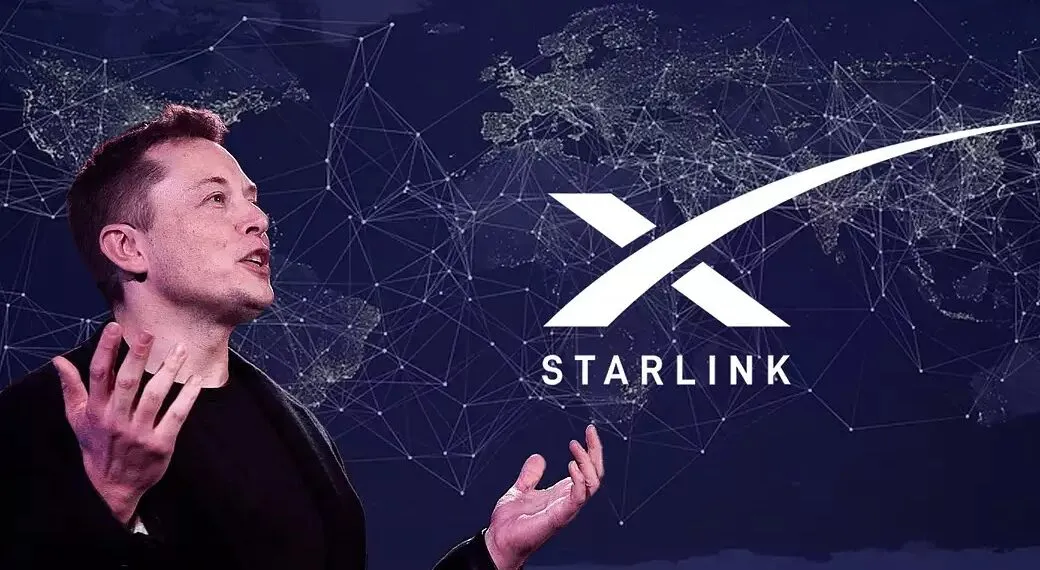
Namibia’s telecoms regulator has given its reason for rejecting Starlink’s application to receive a radio spectrum licence in the country, and it feels like a well-rehearsed theatre. The regulator said the Elon Musk-owned satellite Internet company did not comply with its stated rule for 51% local ownership.
Yes, you heard that right: Namibia wants about half of the ownership in Starlink’s subsidiary business. If you’ve heard that one before, it’s because South Africa, dilly-dallying between sticking with an original 30% ownership rule or switching to an equity equivalence setting, is trying to do so, too.
Lesotho also attempted to lobby for 30% local ownership for its Bathoso people before it crumbled to pressure for next to nothing, other than the bragging rights of “We now have Starlink” of upscale users.
Namibia is nitpicking the paperwork. The telecoms regulator said Starlink had previously contravened the country’s Communications Act and failed to respond to a summons, showing “a total disregard for the governance framework of the sector.”
It further stated that the satellite Internet company failed to meet three of its six licencing conditions.
In yesterday’s edition, we explained that the Communications Regulatory Authority of Namibia (CRAN), the regulator, had previously said that it wants to run an open economy for telecom players. Yet, Starlink’s relatively steep entry price could distort pricing in the market, attracting high-value users, and relegating others to cheaper local networks.
While Namibia says it wants more competition, it clearly does not want to lose jurisdiction, leverage, and its most profitable customers in one sweep.
trade
Nigeria’s digital trade portal to rollout on March 27

Nigeria has soft-launched a digital trade portal that is meant to change how goods move in and out of the country, with the first phase going live on March 27.
It is called the National Single Window (NSW), and the idea is simple: instead of dealing with multiple regulatory agencies during customs clearance, such as the Standard Organisation of Nigeria (SON), importers and exporters will use a single website to submit documents, pay fees, and track approvals in one place.
State of play: In theory, it should cut how long cargo spends stuck in documentation, which the government itself says accounts for most of dwell time at the ports.
For a business owner, that means a few simple things: fewer trips to port offices in Apapa just to “drop one letter,” less money spent on runners and fixers, and better visibility on where your container or shipment is in the approval chain. You submit licences, permits, and certificates on one portal, get decisions faster (if the agencies do their jobs), and ideally clear goods in days instead of weeks.
It is the kind of back-office upgrade that is boring to talk about but meaningful if you are the one trying to move containers.
But as far as digitising Nigerian business goes, a trade portal will only amplify the infrastructural issues it sits on top of: bad port roads, congestion around Apapa and Tin Can in Lagos, weak rail links, and chaotic truck parks. Finance minister Wale Edun admitted this when he said “a digital platform alone does not move goods” and warned that port inefficiencies could wipe out the gains.
What do Nigerians stand to gain? If it works, faster clearance, fewer human touchpoints, less room for petty rent-seeking and, over time, lower costs baked into the prices you pay for imported goods.
The harder question we cannot answer is whether this is a clear example of technology affecting our lives in the smallest way possible, or just another Tuesday for announcing the next shiny object that never quite matches the launch-day speeches.
connectivity
Airtel and Starlink are testing space mobile networks

In more Starlink news, the Elon Musk-owned Internet company is advancing mobile integration efforts with Airtel Africa, a telecoms company operating in 14 countries.
In Kenya, Airtel has successfully tested direct-to-cell (DTC) satellite connectivity with SpaceX, Starlink’s parent company, to allow regular 4G mobile devices to connect straight to a satellite when there’s no network on the ground.
What happened: After signing a deal with Starlink to launch D2C services across all of its African markets in December 2025, Airtel began testing the possibility of this in zero coverage areas, where its network would normally disappear.
The 4G devices automatically connected to Starlink satellites in those zero zones and kept working. The devices were reportedly able to send WhatsApp messages, check maps, and complete Airtel Money transactions.
In Africa, a basic 4G or 3G-enabled phone can handle messaging, mobile money, maps, and light browsing, which is important because with Airtel’s new experiment, users wouldn’t need high-end devices to benefit from satellite-backed coverage. Yet, affordability is the real constraint. According to GSMA, an entry-level smartphone in Sub-Saharan Africa can cost as much as 87% of the average monthly income for the poorest 20%, meaning even basic access is already a stretch.
While Airtel’s setup lowers the hardware barrier (no need for specialised devices), it raises a new question on service pricing. If connecting to satellites comes at a premium, it could stack on top of an already expensive entry point, pushing connectivity further out of reach.
How is this different from what Airtel normally does? Airtel uses terrestrial networks, towers and fibre. Coverage depends on how far those fibres cover. There are no terrestrial towers involved with the DTC connection. Airtel is only testing an extension of its network, not completely replacing it.
Why isn’t it live yet? Regulatory hurdles. This kind of service needs fresh approvals that are different from the usual licences telecoms and satellite Internet providers like Starlink already have; Kenya’s Communications Authority is yet to approve D2C specifically.
Will it work? Airtel’s test proves that the tech already works, but other factors like pricing and bandwidth capacity also matter. Then there’s competition, where rivals could strike similar deals or push back through regulators to protect existing advantages. No real moat for local players.
CRYPTO TRACKER
The World Wide Web3
Source:

|
Coin Name |
Current Value |
Day |
Month |
|---|---|---|---|
 Bitcoin Bitcoin |
$70,530 |
– 1.04% |
+ 11.05% |
| Ether |
$2,139 |
– 1.61% |
+ 16.43% |
| BNB |
$647 |
+ 1.73% |
+ 6.47% |
| Solana |
$92.72 |
+ 1.37% |
+ 15.35% |
* Data as of 06.11 AM WAT, March 25, 2026.
Events
 The voices shaping Africa’s digital future are taking the stage. From AI and IoT to cloud, connectivity and smart infrastructure, IOT West Africa | Data Centre & Cloud Expo Africa 2026 brings together the leaders building the continent’s next digital chapter. This is where the ecosystem meets, and we’ll see you there. The event kicks off on April 28–30 at the Landmark Centre, Victoria Island, Lagos. Register here to attend

Written by: Emmanuel Nwosu and Opeyemi Kareem
Edited by: Emmanuel Nwosu
Want more of TechCabal?
Sign up for our insightful newsletters on the business and economy of tech in Africa.
- The Next Wave: futuristic analysis of the business of tech in Africa.
- Francophone Weekly by TechCabal: insider insights and analysis of Francophone’s tech ecosystem
P:S If you’re often missing TC Daily in your inbox, check your Promotions folder and move any edition of TC Daily from “Promotions” to your “Main” or “Primary” folder and TC Daily will always come to you.

from TechCabal https://ift.tt/vuDGdNE
via IFTTT

I am the CEO of 9JAGISTLAND.My name is Adedeji Timothy and my co-owner is Oyekola Damilare.This blog is born out of our passion to educating to people in all aspect of internet life.We are enthusiastic about writing posts and articles online.
Write your views on this post and share it. ConversionConversion EmoticonEmoticon