



Ramadan Kareem. 
We know your February salary is now sitting pretty in your bank account. Be honest—how much of it is already fighting for its life? Before the bills win, set some aside for Hertitude tickets. On April 11, Zikoko, our sister publication, is bringing the ladies outside for another whirlwind event of fun.
We’re two days away from Citizen Townhall, and tickets to attend are still free.
You can also catch up on all six episodes of Headlines by TechCabal you’ve missed. Your future informed self will thank you. Start here.
And if you’re an advertiser, here’s your cue. While everyone else is fighting for attention, you could be earning it. We’re still accepting sponsorship deals for Headlines by TechCabal; partner with us for thoughtful brand placement backed by TechCabal’s powerful distribution. Talk to our partnerships team.
Let’s dive in.


connectivity
Starlink reopens business-tier plans for customers in Nigerian cities

After months of flashing ‘Sold Out’ signs in Nigeria’s busiest cities, including Lagos, Abuja, and Port Harcourt, Starlink has reopened access to its services, but not for everyone.
It comes at a cost: What’s back is the Business (Priority) plan, starting at ₦159,000 ($99.38) monthly, with hardware that can cost up to ₦4 million ($2,500) if you opt for the high-performance kit. Residential users in high-demand areas remain blocked or waitlisted, and if users want instant access, they have to pay business-tier prices.
Why unfreeze the service now? By keeping major cities permanently sold out, Starlink risks losing visibility and revenue, especially at a time when competitors are beginning to circle. Amazon Leo (f.k.a. Project Kuiper) has already secured landing rights in Nigeria, and if rivals are warming up to take over your user base, you secure the premium customers. Reopening the higher-priced tier allows Starlink to convert pent-up demand in these cities into immediate revenue.
What this means for Starlink: Globally, SpaceX keeps launching satellites, but bottlenecks persist locally. Satellite internet depends on orbiting hardware as well as local ground infrastructure and regulatory clearance. Even with thousands of satellites globally, urban demand in Nigeria is outpacing Starlink’s operational capacity. Yet, reopening its ‘Priority’ plan doesn’t automatically solve its network congestion problem. It only temporarily solves a problem for a deep-pocketed user class willing to pay a premium.


We are expanding across Africa!
Fincra is expanding across Africa, building the financial infrastructure that powers Africa’s cross-border payments. Build with us. Explore open roles.
banking
GTBank Kenya appeals CAK’s $257,000 fine over corporate lending misconduct
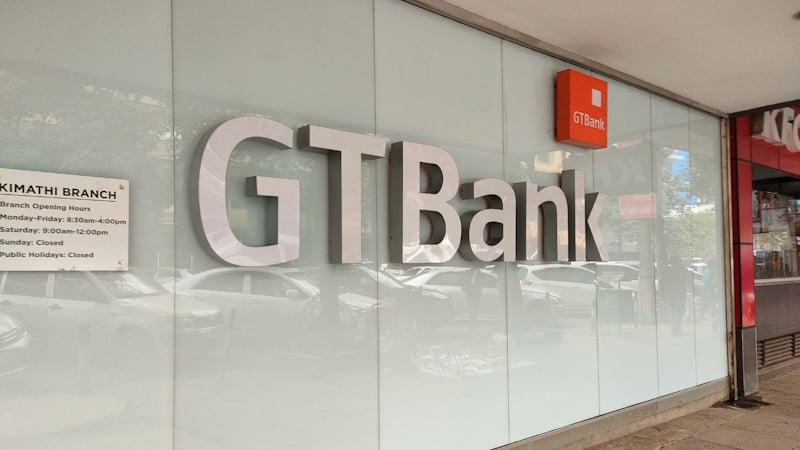
Guaranty Trust Bank Kenya (GTBank Kenya), the subsidiary of the Nigerian tier-1 commercial lender, has appealed the KES 33.18 million ($257,000) fine from the Competition Authority of Kenya (CAK).
The bank pushed back against a ruling that accused it of misleading a long-time corporate client, ASL Limited, and abusing its bargaining power. “The decision to appeal reflects the Bank’s view that the Authority’s findings are not supported by the facts and evidence presented during the investigation,” GTBank said.
The regulator disagrees. Its investigation found the bank cut ASL’s credit limits, imposed fresh conditions, backdated default interest, and presented materially altered loan terms as routine renewals, while the client was effectively locked in.
The case signals a shift in who polices bank behaviour. Traditionally, Kenya’s central bank focused on stability: rightly obsessing over capital ratios, liquidity, and solvency. The competition regulator is stepping in to question process, leverage, and fairness. It is no longer enough for banks to stay solvent. They must also prove they stayed fair.
Why does this matter? Corporate borrowers often depend heavily on a single bank. Switching lenders is slow, expensive, and risky, especially when millions of dollars in facilities are involved. That dependency creates leverage. Kenya’s regulator is saying that leverage cannot be used to rewrite the rules mid-relationship.
The bigger picture: This case could permanently change the power dynamics between banks and businesses. It could set a precedent for participants in the banking sector: more protection for borrowers, and better clarity and explicit loan and re-negotiation terms for banks, knowing that watching out for legal and fairness risk is now a crucial part of this process.
The Smarter Way to Save

The Smarter Way to Save
Earn up to 20% interest on your savings with PalmPay. Join over 40 million users building smarter saving habits with simple, automated tools designed for everyday life.
cryptocurrency
South Africa wants to monitor how cryptocurrencies move across borders

The ‘borderless’ promise of cryptocurrencies (a.k.a. internet money) is the main reason people use them—probably the overwhelming reason for nine out of ten people you ask. However, South Africa wants to put a door on that hatch; the country says it will introduce the same (or similar) guardrails that govern the cross-border movement of traditional money to crypto.
The National Treasury plans to bring crypto assets under the country’s exchange control rules, meaning bitcoin, Ethereum, and stablecoins could soon face the same cross-border reporting and limits as traditional money. The move follows years of rapid adoption and an uncomfortable stat for regulators: nearly R63 billion ($4 billion) has flowed from South African bitcoin wallets to offshore destinations since 2019, according to the South African Reserve Bank (SARB).
The concern is not crypto itself, but what it enables. Exchange controls are designed to manage how much capital leaves the country each year. Crypto breaks that model. It moves instantly, globally, and often outside the traditional banking system. Regulators worry that without oversight, it becomes a pressure valve for capital flight, especially in an economy where currency stability is closely watched.
For crypto operators in South Africa, the bigger issue has been uncertainty. Crypto does not neatly fit the legal definition of local or offshore assets, leaving investors and advisors guessing how it should be treated. Clear rules could legitimise the sector, open the door for local crypto investment products, and even boost tax collection.
The bigger picture is a familiar trade-off: Control versus competitiveness. South Africa wants to position itself as a crypto and financial hub, but it also wants visibility over every rand leaving its borders. Bringing crypto into exchange control formalises, rather than kills adoption.
Join the second edition of The Citizen Townhall

Tech is political!
Political decisions shape and reshape the tech landscape every single day. So here’s the big question: Who gets to shape our lives and what can we do about it?
That’s the conversation we’ll be having at the second edition of The Citizen Townhall; on February 28, in Lagos. Join the conversation. Register now for FREE.
Banking
South Africa wants to accelerate data centre growth
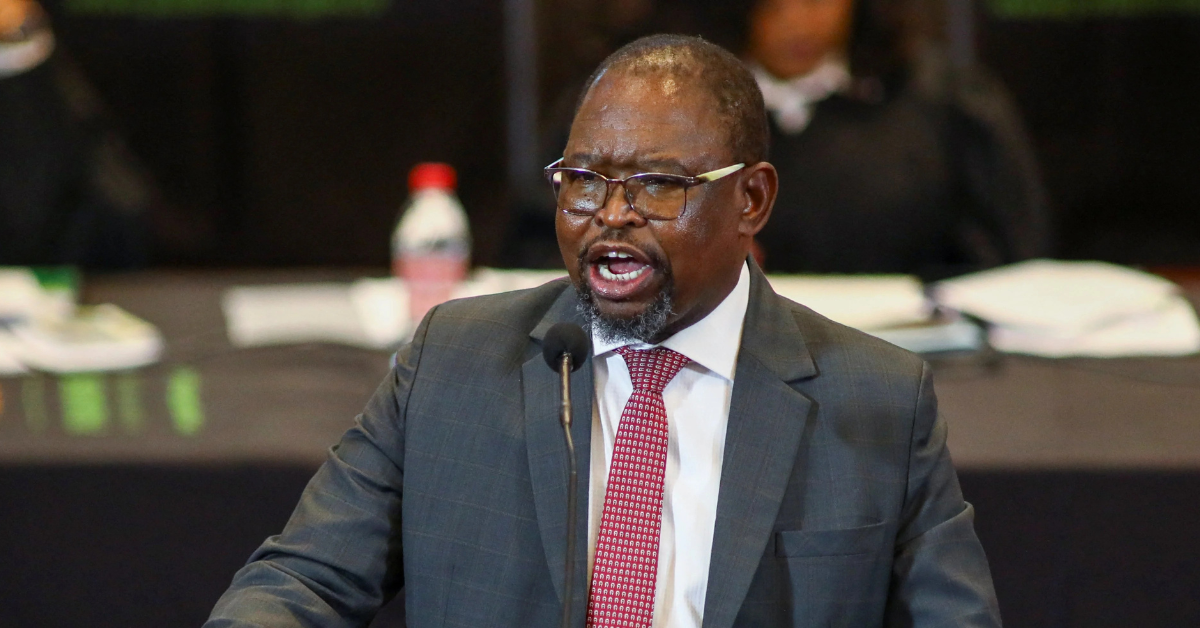
South Africa’s National Treasury has announced a change in how it sees data centres in the country; data infrastructure is no longer just a private-sector play, it’s now being treated like core economic plumbing. In the 2026 budget speech, Enoch Godongwana, the country’s finance minister, said that data centres are essential infrastructure, on par with electricity, ports, and transport.
What is actually changing? The Treasury plans to explore ways to accelerate data centre growth and strengthen South Africa’s position as a continental digital hub. While no formal incentives have been announced yet, the language suggests possible tax breaks, faster approvals, value-added tax (VAT) relief on imported equipment, and improved grid connections.
South Africa’s current data centre build-out: South Africa already has over 50 operational data centres, with a combined investment pipeline worth roughly R50 billion (about $2.7 billion) for projects planned over the next three years. The market is also entering a consolidation phase. Larger operators are acquiring smaller facilities, as Open Access Data Centres (OADC), a data centre operator and subsidiary of the WIOCC Group, acquired seven NTT Data facilities in February 2026.
Here’s why it matters: Data centres anchor digital economies. They attract fintechs, AI startups, global cloud providers, and multinational tech companies. The closer the infrastructure, the lower the cost of the infrastructure and the level of latency. But data centres consume a lot of power, and electricity supply constraints in South Africa remain the biggest bottleneck. If the country can tackle energy reliability and improve policy support, South Africa could achieve its goal of being Africa’s hub for AI and cloud infrastructure.
CRYPTO TRACKER
The World Wide Web3
Source:

|
Coin Name |
Current Value |
Day |
Month |
|---|---|---|---|
 Bitcoin Bitcoin |
$68,429 |
+ 5.53% |
– 22.62% |
| Ether |
$2,065 |
+ 9.63% |
– 29.64% |
| XRP |
$1.44 |
+ 6.84% |
– 23.78% |
| Solana |
$87.71 |
+ 8.18% |
– 29.39% |
* Data as of 06.44 AM WAT, February 26, 2026.
Events
- East Africa’s digital economy is scaling fast, but cyber resilience isn’t keeping up. On February 26, in Nairobi, Smartcomply will host The Secure Horizon Executive Breakfast, an invitation-only forum bringing together senior leaders across finance, fintech, tech, and regulation to confront the widening gap between AI-driven growth and operational security. The closed-door gathering will feature keynote insights on AI-accelerated cyber risk, a regulatory fireside chat, and the launch of a new research report developed with TechCabal Insights, exploring how evolving threats are reshaping East Africa’s digital trust architecture. Learn more and register here.

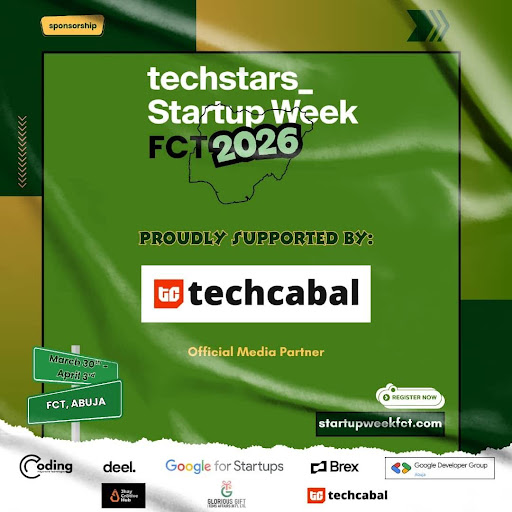
- Techstars Startup Week FCT 2026 will take place from March 30 to April 3, 2026, in Abuja, Nigeria, convening founders, developers, and investors for five days of workshops, pitch sessions, mentorship, and networking. Organised as part of Techstars’ global initiative and supported by partners, including TechCabal and Google for Startups, the event will equip early-stage builders with practical skills, capital access, and ecosystem connections while spotlighting Abuja’s growing role in Africa’s tech landscape. Register to attend.
- The 15th Annual MIT Africa Innovate Conference will take place on February 28, 2026, at the Massachusetts Institute of Technology in Cambridge, Massachusetts, USA, and hosted by the MIT Sloan Africa Business Club. With the theme “African Intelligence: Building Systems for Shared Prosperity,” the conference will bring together African founders, investors, and policymakers, including keynote speaker Funke Opeke, for panels, a hackathon, gala night, and a Deal Room session designed to turn ideas into partnerships and capital. Register to attend.

Written by: Opeyemi Kareem and Emmanuel Nwosu
Edited by: Emmanuel Nwosu & Ganiu Oloruntade
Want more of TechCabal?
Sign up for our insightful newsletters on the business and economy of tech in Africa.
- The Next Wave: futuristic analysis of the business of tech in Africa.
- Francophone Weekly by TechCabal: insider insights and analysis of Francophone’s tech ecosystem
P:S If you’re often missing TC Daily in your inbox, check your Promotions folder and move any edition of TC Daily from “Promotions” to your “Main” or “Primary” folder and TC Daily will always come to you.

from TechCabal https://ift.tt/AH6Zxzd
via IFTTT

I am the CEO of 9JAGISTLAND.My name is Adedeji Timothy and my co-owner is Oyekola Damilare.This blog is born out of our passion to educating to people in all aspect of internet life.We are enthusiastic about writing posts and articles online.
Write your views on this post and share it. ConversionConversion EmoticonEmoticon